Saturday, March 28, 2009

15 in 1 Million

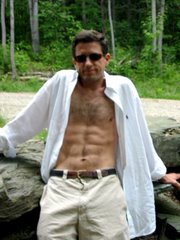
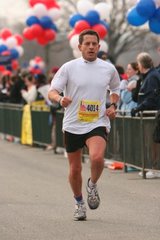
If I tri'd right now, I suspect I'd be one of these 15:

Study: Triathlons can pose deadly heart risks

By Marilynn Marchione, AP Medical Writer | March 28, 2009

ORLANDO, Fla. --Warning to weekend warriors: Swim-bike-run triathlons pose at least twice the risk of sudden death as marathons do, the first study of these competitions has found.

The risk is mostly from heart problems during the swimming part. And while that risk is low -- about 15 out of a million participants -- it's not inconsequential, the study's author says.

Triathlons are soaring in popularity, especially as charity fundraisers. They are drawing many people who are not used to such demanding exercise. Each year, about 1,000 of these events are held and several hundred thousand Americans try one.

"It's something someone just signs up to do," often without a medical checkup to rule out heart problems, said Dr. Kevin Harris, a cardiologist at the Minneapolis Heart Institute at Abbott Northwestern Hospital. "They might prepare for a triathlon by swimming laps in their pool. That's a lot different than swimming in a lake or a river."

He led the study and presented results Saturday at an American College of Cardiology conference in Florida. The Minneapolis institute's foundation sponsored the work and tracks athlete-related sudden deaths in a national registry.

Marathon-related deaths made headlines in November 2007 when 28-year-old Ryan Shay died while competing in New York in the men's marathon Olympic trials. Statistics show that for every million participants in these 26.2-mile running races, there will be four to eight deaths.

The rate for triathletes is far higher -- 15 out of a million, the new study shows. Almost all occurred during the swim portion, usually the first event.

"Anyone that jumps into freezing cold water knows the stress on the heart," said Dr. Lori Mosca, preventive cardiology chief at New York-Presbyterian Hospital and an American Heart Association spokeswoman. She had no role in the study but has competed in more than 100 triathlons, including the granddaddy -- Hawaii's Ironman competition.

Cold water constricts blood vessels, making the heart work harder and aggravating any pre-existing problems. It also can trigger an irregular heartbeat. On top of this temperature shock is the stress of competition.

"It's quite frightening -- there are hundreds of people thrashing around. You have to keep going or you're going to drown," Mosca said.

Swimmers can't easily signal for help or slow down to rest during swimming as they can in the biking or running parts of a triathlon, said Harris, who also has competed in these events. Rescuers may have trouble spotting someone in danger in a crowd of competitors in the lakes, rivers and oceans where these events typically are held, he added.

For the study, researchers used records on 922,810 triathletes competing in 2,846 USA Triathlon-sanctioned events between January 2006 and September 2008.

Of the 14 deaths identified, 13 occurred during swimming; the other was a bike crash. Autopsies on six of the victims showed that four had underlying heart problems. Two others had normal-looking hearts, but they may have suffered a fatal heart rhythm problem, Harris said.

A search of the Minneapolis registry and the Internet found four other triathlon-related deaths from 2006 through 2008 beyond those that occurred in the officially sanctioned events.

"While not a large risk, this is not an inconsequential number," Harris said.

Fundraising triathlons have enticed many runners to try to expand into areas like swimming, which they may not have learned to do very efficiently, to benefit particular charities, Mosca said.

"They're really recruiting people to do these events," she said. "It can be a recipe for disaster."

Doctors offer these tips to anyone considering a triathlon:

--Get a checkup to make sure you don't have hidden heart problems.

--Train adequately long before the event, including open-water swims -- not just in pools.

--Acclimate yourself to the water temperature shortly before a race, and wear a wetsuit if it's too cold.

--Make sure the race has medical staff and defibrillators on site.

----

On the Net:

Heart meeting: http://www.acc.org

American Heart Association: http://americanheart.org

Registry: http://www.suddendeathathletes.org

Monday, March 23, 2009

Clanking Along

It was a pretty rough week -- ran five miles a week ago on Monday, then slacked off all week. Felt MS-y as hell all week, with sore muscles, dizziness, spasms, exhaustion, the whole deal. Primary doc is sending me to a neurologist for more workups.

At least the eye doctor didn't turn up anything.

But I digress. A bit of a busy week on the home front, harvesting chickens. We only had one Headless Flopper out of a couple dozen. The kids were appropriately horrified by the whole process.

Got out and ran a 5-K tonight. Felt a bit like the Tin Man, rumbling and clanking along Raponda Lake Road. It's a bit cold, wind chill dropping down to zero tonight. It'll be spring here one of these days.

Tuesday, March 10, 2009

A Running Fool

I'm getting there. Slowly, but getting there. A dozen miles here, a dozen there ... and pretty soon, you're at 30-40 per week. It's slow, and it's frustrating, but I feel a bit better every time I run (although after a four-mile run early this morning, I'm pretty wasted. Still getting a bit of energy back, and a ton of of work done at the day job).

And here's my personal moment of Zen. It's epic viewing, if you haven't seen it:

Tuesday, March 3, 2009

Sue Me, I'm Sad

Stuck in Town Meeting for most of the day. Sigh. Trying to get some work done. So far, it's two big and good votes (keep a penny tax for economic development in the Valley, much needed, and throw some money to the non-profit day care center by the library, also much needed).

Lot to do today. Lisa is basically half-handed after the second hand surgery, so I'm running amok. Lots of day job things to do, animals to feed, fires to keep going, meetings to endure, miles to run.

On a sad note: If you've ever driven across Texas for hours and hours and hours, you listened to Paul Harvey. And while you might not have agreed with everything he said, the man had a voice. Calming, even while you disagreed violently with him -- something you can't really can't say about most other talkers. Here's the top half of the NYTimes obituary:

Paul Harvey, who captivated millions of American listeners for nearly six decades with his homespun radio news reports and conservative commentaries, delivered nationally on weekdays in a stentorian staccato, died on Saturday at the Mayo Clinic Hospital near his winter home in Phoenix. He was 90.

Mr. Harvey, who lived in the Chicago suburb of River Forest, died with his family at his side, Louis Adams, an ABC Radio Networks spokesman, told The Associated Press. No cause was given.

Mr. Harvey, who joined ABC in 1951, was forced to suspend his broadcasts for several months in 2001 by a virus that weakened a vocal cord, but he returned to his Chicago studio and remained on the air until recently.

In his heyday, which lasted from the 1950s through the 1990s, Mr. Harvey’s twice-daily soapbox-on-the-air was one of the most popular programs on radio. Audiences of as many as 22 million people tuned in on 1,300 stations to a voice that had been an American institution for as long as most of them could remember.

Like Walter Winchell and Gabriel Heatter before him, he personalized the radio news with his right-wing opinions, but laced them with his own trademarks: a hypnotic timbre, extended pauses for effect, heart-warming tales of average Americans and folksy observations that evoked the heartland, family values and the old-fashioned plain talk one heard around the dinner table on Sunday.

“Hello, Americans,” he barked. “This is Paul Harvey! Stand byyy for Newwws!”

He railed against welfare cheats and defended the death penalty. He worried about the national debt, big government, bureaucrats who lacked common sense, permissive parents, leftist radicals and America succumbing to moral decay. He championed rugged individualism, love of God and country, and the fundamental decency of ordinary people.

“You can almost hear the amber waves of grain,” the comedian Danny Thomas told him.

Mr. Harvey was unapologetic. “I have never pretended to objectivity,” he once said. “I have a strong point of view, and I share it with my listeners. I have no illusions about changing the world, but to the extent that I can I’d like to shelter your and my little corner of it.”

He loved human-interest stories, and the one-liners he tacked on to them. “Nudists in Lakeland, Florida, are upset that outsiders are sneaking a peek through a hole in their fence,” he intoned. “The police promise to look into it.”

Or: “A man called the I.R.S. and asked if birth control pills could be deducted. The I.R.S. worker, not missing a beat, came back and said, ‘Only if they don’t work.’ ”

Or: “White House occupants come and go. They are just like diapers. They should be changed often, and for the same reasons.”

In a format virtually unchanged over the years, his style was stop-and-go, with superb pacing and silences that rivaled Jack Benny’s. He spoke directly to the listener, with punchy sentences, occasional exclamations of “Good heavens!” or “Oh, my goodness!” and pauses that squeezed out the last drop of suspense: the radio broadcaster’s equivalent of the raised eyebrow or the knowing grin.

He was a wordsmith, too, banging scripts out on a typewriter, and rightly or wrongly was credited with inventing the terms “Reaganomics,” “skyjackers,” and “guesstimate.” Listeners came to expect stock cues: “Stay tuned for the rest of the story,” and “May I have your undivided attention for just a moment.”


Monday, March 2, 2009

More Snow. And Ice.

Took Lisa down to the hospital for her second hand surgery today. Enjoyed my first ice-slip of the entire year -- right down on the elbow. Ouch. Hurt like hell. 

Thinking today is maybe not such a good running day, after all.

Here's my fun thought du jour, courtesy of Ben Sargent:

Friday, February 27, 2009

The Skating Rink

Went for another 5-K tonight. I'm dragging in the mornings, so it seems to make sense. At least, it usually makes sense, but not so much tonight. It warmed up something wild today, temperature in the low 50s, then started raining late afternoon. It had cooled off quite a bit by 8p when I dropped 10 dozen eggs off at the market and started out running on Raponda Road. This limited my choices; I could run on an icy road, I could run in snowdrifts, or I could run in ankle-deep, muddy water.

The good news is, I only fell down once.

Based on tonight's run, I'd say mud season is coming early. I know better, though. We haven't had a single nor'easter this winter -- at least, I don't think we've had one -- which means it's going to be a rough March. Still, it feels really good to run, and it even feels really good to run in the rain. For some odd reason, running in the rain makes me feel like I'm going to be a runner again.

In other news, we're adjusting to the new chickens. We got 65 of them -- 25 production Reds, 35 Aruacanas, and five Buff Orpingtons. The first few nights were rough; the peep-peep-peep coming from the brooder in the bathroom doesn't make for great sleeping. But I'm getting used to them again.

Other animal news. The kids in the dairy goats are starting to kick. We've lost one Nigerian doe; poor girl hung herself in a hay net. My lead milk goat, North Star, miscarried. But we've still got three does in the family way, and you can feel the little kids occasionally. For some reason, they get a little more active when Stink, the famous border collie, wanders into the goat barn.

(Why is Stink famous? Check this out.)

Busy week ahead. Lisa and I went into Brattleboro today to find a jeweler who could cut her wedding ring off her finger. She hasn't taken it off forever, so it had to be cut off before her carpal tunnel surgery on Monday -- the second of two. Anyway, the jeweler directed us to the fire department, and we had a trio of firefighters snip the ring. Because this is her second surgery in the last month, she'll be dealing with roughly half of one hand. So it's going to be a busy week or two while she gets her hands back.

Thursday, February 26, 2009

Running at Night

A long time since I had a night run. Seems like I've run in the early morning forever. But I tried it on Wednesday, and it worked out OK. A bit slow, but still OK. Lots of stars, not so much ice.

Trying to keep pace to do 12 miles this week.

Monday, February 23, 2009

A Good Sore. I Hope.

Starting running again always hurts. Always.

It's sore, but it's a good sore.

Blew the snow off the driveway, all 650 feet of it, at lunch. That was my workout du jour.

Cold outside, below zero with the wind chill. I'll try running tomorrow, hope for less wind.

And, as always, less triteness in the blog.

Sunday, February 22, 2009

Held for Questioning

So I've been feeling hugely bad for the last ... hell, the last two months or so. Doctors looking into things, poking around, trying to figure what's wrong. Everything from semi-benign little owies like low calcium, thyroid imbalance and weight gain (!) to things we'd rather not talk about, places we really don't want to go.

The consistent advice that I've gotten, though, is that I need to exercise. I've been sleeping 12-14 hours per day, feeling tired all the time even so. This morning I got up and ran, 5K. At least, I started to run 5K. But I was interrupted.

Held for questioning, as it were.

I'd made about a mile down a lakefront road about 815a this morning, hoping to beat a big snowstorm and still have time to get to the hardware store for a new bathtub stopper (part of another diagnostic test. Really). It wasn't too bad; I was stumbling a bit, but there wasn't heavy tourist traffic, it wasn't too windy, and it hadn't started to snow yet. I was feeling OK, even after the three marked and one unmarked state police cars converged on me.

Understand, four state police cars in one location in Vermont can only mean one of three things: Community event with free food, lunch break, or very bad news. Predictably, it was the latter. They were looking for a short (me) male (me) in his mid-30s (me, about a decade ago) in a blue sweatshirt (me again) with a beard.

It was a bit frosty, so I was wearing a neck warmer that covered my face. I couldn't help but notice the hands on the guns. One of the morals of the story: Keep your ID with you. I handed over my driver's license and sat while they ran it. A few questions later, I was back on the road, plodding along. Turns out the aforementioned short, bearded, young male in the blue sweatshirt had been threatening an ex-girlfriend. The troopers were ... professional, but made me very happy I didn't have a beard.

Got enough health problems going on without lead poisoning.

I'll catch up more later.

Sunday, December 7, 2008

An Afternoon in the Life

It occurs to me that late afternoons are busy. Today was typical:

I took a bucket of spoiled fruit and veggies to the pigs around 4p, then got the goats out of the shed and helped them jump the electric fence. They wandered over to share the lettuce with the pigs while I went to the car and got some mulch hay for the little pig house. It's supposed to be cold, wind chill around -15. We really don't want the pigs to come down with pneumonia two weeks before the butcher makes it here.

The pig's water tub was frozen, so I flipped the ice out and poured an eight-gallon bucket of water into it. We threw some more grain and corn into a bucket and gave that to the pigs. With the goats and pigs occupied, we moved along to the chickens and other goats.

First thing is feeding the broilers, lifting a 50-pound sack of grain and dumping about a third of it into the feeder. I also refilled the watering fount and a five-gallon water bucket for the ducks, then gave everyone a scoop or two of loose whole corn. Lisa dumped about five pounds of lettuce into the pen, and we were done with the broilers.

(Hopefully, we'll be really and truly done with the broilers soon).

We got 18 eggs out of the laying henhouse and put grain in their feeder. We gave the Nigerian goats grain, fresh hay and water, and threw about 10 pounds of lettuce to the laying hens and turkeys. Then we cleaned up the Nigerian buck's hooves -- he's got problems with his feet -- and poured a bucket of water into the laying hens' waterer.

I went to the market to get a pig bucket and scooted by the grocery. By the time I made it back, Lisa retrieved the big goats from the pig pasture and milked the doe. She also gave them fresh hay, grain and water.

Time from start to finish? About an hour and 15 minutes. And that doesn't include shoo-ing the border collies out of the way periodically.

Friday, November 28, 2008

A Nice Story

I don't think I'll ever make 30 years, but it's nice to see a kid who's so proud of her dad:

Last month, my dad celebrated the 30th anniversary of his running streak.

In other words, he has run every day for 10,987 consecutive days. The last time he took a pass -- he was feeling a bit sore after a marathon -- was Oct. 30, 1978.

Obsessive doesn't begin to describe it.

When he travels overseas, my dad, who is 66, plans layovers so he can get in a couple miles around the concourse, lest he miss a day to the time-zone shift. During blizzards, he wraps his feet in plastic bags, pulls galoshes over his sneakers and screws in cleats for traction. Then he waits for a snowplow to pass his front door, so he can follow in the freshly cleared path.

My father, Dr. Harvey B. Simon, practices internal medicine in Boston and teaches at Harvard Medical School. Rationally, he knows that running 10 miles a day, every day, for three decades is not great for his ever-more-creaky body. He'd never advise his patients to do it. In fact, he's written several health and fitness books stressing the virtue of moderation in exercise. And yet....

He's run with broken toes and the flu and a nasty infected heel and near-crippling back spasms. He goes out before dawn in every kind of weather; he's become such a fixture in the neighborhood that a couple times when a freak thunderstorm has rolled in, strangers have driven out to find him. They didn't know his name. They just knew he'd be out there, plodding away, and figured he might appreciate a ride home.

My dad isn't alone in this nutty obsession. The U.S. Running Streak Association lists 31 members who have been running daily for 30 years or more. The reigning champ is a running coach out of California by the name of Mark Covert. He hasn't missed a day since he was 17. He's now 57.

Every streaker has a story of inspired persistence -- or, viewed another way, lunacy. One tells of holding his catheter aloft as he hobbled out after surgery. Another ran on a cruise ship -- during a tropical storm.

Ronald Kmiec, a concert pianist in Carlisle, Mass., jogged for four days through severe chest pains, until his wife dragged him to the hospital. Turned out he'd had a heart attack. He was so determined to keep the streak alive, he asked the nurse to take him to a treadmill. She nixed that idea, and his streak ended one day short of 32 years. (Undaunted, Mr, Kmiec got right back on the road and completed his 35th consecutive Boston Marathon five months later.)

Why do they do this? All kinds of reasons. Some streakers say they commune with God during their daily runs. Others think through knotty problems at work. The run structures the day; gives a sense of order to a hectic life.

As streakers grow older, their accomplishment also represents a triumph over aging. You don't give in to aches and pains; you conquer them. You don't wallow in anxiety; you lace up your sneakers. You feel, if not invincible, at least indomitable, and it's not hard to see why; if you're still doing at 66 the same thing you did at 36, you must be doing all right.

My dad started running for health reasons after my mom ordered him to lose weight. He has a family history of heart disease, and he soon found that regular exercise kept his cholesterol and blood pressure under control. I'm sure that's one motivation for the streak.

But the main reason, truly, is that he loves getting out there in the first rays of morning, letting his mind drift, with nothing to do but take the next step. He started the streak, he says, because he got tired of spending every cold, dark morning debating with himself about whether to go out. "I figured, why waste time debating? I'd just go out every day," he says. "So I did."

When people ask why he doesn't take just one day off, he shrugs and says, "I like to run."

Asked how he's kept at it so long, he responds: "Left, right, left, right."

His stride, never all that fluent, has broken down over the last 100,000 miles to the point that he now has what the family politely refers to as a "distinctive gait." His hip hurts. He's slow. And still... left, right, left, right.

When he hit 25 years, my dad talked about pulling a "Cal Ripken Jr.," after the Baltimore Orioles infielder who benched himself one day when he was perfectly healthy, putting an end to an incredible streak of playing in 2,632 consecutive games. Mr. Ripken had wanted to end the streak on his own terms, not wait for injury to force him out. My father said that sounded good. But I knew in my heart he'd never do it.

The streak is too much a part of him.

I worry about that sometimes. He's proud of his streak, and I think his running longevity -- the fact that he's prevailed against injury, weather and all the rest -- has strengthened his spirit. He's a born optimist, but the streak has made him even more confident, even more resilient.

What will happen when it ends?

On one level, I know that's a ridiculous question. The streak does not define my dad. He still practices and teaches medicine; he still writes and edits. He and my mom take art history courses, study music, volunteer, travel.

But still, I worry.

In running -- in streaking, in particular -- my dad has found an outlet to express personality traits that might otherwise stay submerged. He's a humble and reserved man, but his streak is such a goofy accomplishment that he's given himself license to celebrate it.

For his 10-year anniversary, he threw himself a 10K race -- a "ten-athon." He carried the invitations on his runs, because he wanted to hand them out to all the friends he knew only by first name -- fellow joggers who would fall in with him for a few blocks or a few miles every week. My dad made some good friends this way; there is a true camaraderie on the streets at 5 a.m.

When I was 8 or 9, I started running with him, too -- after he'd put in 10 or 12 miles on his own. It was my best chance to spend time with him. When I flagged, he'd keep me going by recounting the latest Red Sox game in dramatic, play-by-play detail. I'm quite sure he made most of it up, but I was always riveted.

Running with me let my father indulge his screwball sense of humor. One year, we ran in a road race just before Thanksgiving, and though it wasn't supposed to be a costumed affair, my dad talked me into dressing like a chef, with a giant tin-foil cleaver. He put on a turkey costume and as per his instructions, I spent the entire 5-mile route a few steps behind him, waving the cleaver and shouting: "Come back here, you turkey!"

I haven't run with him for years, but he recently sent me a ratty T-shirt he found in my childhood room, from a road race we ran in 1983. I often wear it when I work out, and I think back with a smile on all those runs with dad.

The U.S. Running Streak Association requires members to run at least one continuous mile a day to remain on the active list. (It's all based on the honor system, but as founder John J. Strumsky Jr. asks, "What would be the point of lying?") The association also keeps an honor roll of retired streaks. As I glanced over it, the fourth-place entry caught my eye. Lawrence Sundberg, a retired schoolteacher from Farmington, Conn., had clocked a streak that lasted exactly 30 years -- from New Year's Day 1977 through New Year's Eve 2006. It looked to me like he had pulled a Cal Ripken, and when I called, he said that was it exactly.

"With something like this, either it's going to end you, or you're going to end it," he said.

Mr. Sundberg said he spent six months mentally preparing for the end, and when the appointed day came, he was ready -- though he did startle awake at 11 p.m. and briefly contemplate keeping the streak alive on a moonlit run.

In the two years since, Mr. Sundberg says he has missed just four or five runs. "I still go out at 5:30 a.m. most days," he said. "But I don't have to."

He's adjusted so well that I consider urging my dad to talk with him.

But then.... My dad likes to run. He's happy out on the sidewalk at dawn. Left, right. Left, right.

Write to Stephanie Simon at stephanie.simon@wsj.com

Saturday, November 22, 2008

It's Been A While

... but I've been busy. Odd how busy you can become when your company announces plans for layoffs in the spring. And unlike every other company in our industry, mine doesn't have plans for buyouts, which traditionally have eased the pain of getting fired.

Not that I'm bitter or anything.

Spent a chunk of this afternoon with the chainsaw, taking down a few final trees. I'll spend most of tomorrow hauling them out of the woods, dumping them on the driveway, loading them in the Outback, taking them up the driveway, throwing them out of the Outback, and stacking them underneath Will's window.

If nothing else, a good upper-body workout.

Friday, November 7, 2008

The End Is Near

Root cellaring in New York? The end, indeed, must be near ...

November 6, 2008

Food Storage as Grandma Knew It

IN a strictly technical sense, Cynthia Worley is not transforming her basement into a time machine. Yet what’s going on this harvest season beneath her Harlem brownstone on 122nd Street, at Adam Clayton Powell Jr. Boulevard, is surely something out of the past — or perhaps the future.

The space itself is nothing special: Whitewashed granite walls run the width and depth of the room, 16 feet by 60 feet. A forgotten owner tried to put in a cement floor, but the dirt, which takes a long-term view of things, is stubbornly coming back. “It’s basically a sod floor,” Ms. Worley said.

What’s important is that the shelves are sturdy, because Ms. Worley and her husband, Haja Worley, will soon load them with 20 pounds of potatoes, 20 pounds of onions, 30 pounds of butternut and acorn squash, 10 heads of cabbage, 60-odd pints of home-canned tomatoes and preserves, 9 gallons of berry and fruit wines, and another gallon or two of mulberry vinegar.

The goodies in the pint jars and the carboys come from the Joseph Daniel Wilson Memorial Garden, which the Worleys founded across the street. The fresh produce is a huge final delivery from a Community Supported Agriculture farm in Orange County, which they used all summer. Packed in sand and stored at 55 degrees, the potatoes should keep at least until the New Year. The squash could still be palatable on Groundhog Day, and the onions should survive till spring. Ms. Worley, who counsels and teaches adults for the New York City Department of Education, and Mr. Worley, a neighborhood organizer and radio engineer, will let their basement-deprived friends store vegetables, too.

The Worleys, like a number of other Americans, have made the seemingly anachronistic choice to turn their basement into a root cellar. While Ms. Worley’s brownstone basement stash won’t feed the couple through the winter, she said, “I think it’s a healthy way to go and an economical way.”

According to a September survey on consumer anxieties over higher fuel and food prices from the Leopold Center for Sustainable Agriculture at Iowa State University in Ames, 34 percent of respondents said that they were likely to raise more of their own vegetables. Another 37 percent said they were likely to can or freeze more of their food. The cousin to canning and freezing is the root cellar.

Thursday, November 6, 2008

Stink

I noticed I had a good picture of Pepper, but none of Stink, the border collie. His real name is Flash, and he does not look like a Stink here.

But trust me on this one:

Not So Much in Vermont

Back from a week in Texas, helping out the father. Long story, but he's OK. In my absence, Lisa acquired two Nigerian dwarf goats, which are excellent for cheese. Well, the doe is great; the buck probably won't be much help, unless I want to market Stink-to-High-Heaven cheese to the masses. We'll use him as a breeder, I'm thinking.

Too much catching up to do. But I was charmed by this NYTimes piece today. It's true; I used to run in the city and was always amazed when I made it home safely. Even in Central Park. Never got beaned with a Krispy Kreme, though:

November 6, 2008
FITNESS

Road Runner Rage

JEAN KNAACK couldn’t keep a lid on it. While on a six-mile run near her home in Maryland, she raised her water bottle and expelled its contents onto the passenger-side window of a car.

Ms. Knaack, a 115-pound runner, had been jogging on the sidewalk when the vehicle had come within inches of hitting her. The driver had blindly pulled out of an adjacent parking lot, and Ms. Knaack responded with the aggressive squirt, coupled with a few choice expletives.

She did not anticipate what happened next.

The driver pulled the rest of the way out of the parking lot and into the street, whipped around in an intersection, got out of the car, and confronted her. Amid of flurry of profanities, the motorist threatened to strike her with a beer bottle. “The fact that he was so specific really scared me,” she said. “My heart rate shot sky high. I felt like I was going to pass out.”

Even though Ms. Knaack was a seasoned runner — she’s the executive director of the Road Runners Club of America — and is knowledgeable about proper training technique and nutrition, she never got the memo on what do when an angry or negligent motorist takes a workout sideways. That’s because there really isn’t one.

While road rage between cyclists and motorists has drawn some attention lately, adversity has long existed between runners and motorists “on a low level,” says Brent Ayer, the head running coach at Hood College in Frederick, Md., who, years back, was pelted with a jelly doughnut while running.

Not that it’s always the driver’s fault. “I watch runners cut through intersections, cross in the middle of the street, and crowd cars,” Mr. Ayer said. “We are not entirely blameless.”


Thursday, October 23, 2008

Another Inspiration Heard From

A really inspirational story. Well-written, too.

Running for my life: 1 woman's race against time

PHILADELPHIA – The routine was the same as always — the exact way I have grown accustomed to dealing with the hours before a big race. But on that November morning last year, everything else was different.

I had awakened before the sun and come downstairs to all of my running gear, laid out perfectly the night before, exactly as planned. There it all was: bottled water, my fanny pack, gels to eat along the way, my precious iPod with its playlist calibrated just for me. Exactly as planned.

I had even pinned my number to my shirt in advance. Alone, in silence, I ate a banana and a granola bar and half a bagel. Exactly as planned.

I thought to myself: I need this routine. I need to be a robot today.

Nearly five years before this day, before I started running, I had been diagnosed with melanoma skin cancer in my left shin. Then, much later, came the thyroid cancer; they found that one looking for more melanoma. I was 51 and I had two forms of cancer. Now here I was in the middle of chemotherapy — weakened, scared, with more chemo scheduled for the following day. And I was heading out to run a half-marathon on the streets of Philadelphia.

What was I thinking?

I arrived at the starting gate and joined the pack of runners. The sun was coming up. Nearby, I could see the city's art museum, where Rocky climbed the steps in triumph so many years ago.

I never heard the starting gun, but the people ahead of me began to move.

I clicked my iPod. My song came on — "Gonna Fly Now," Rocky's inspiration. Appropriate for Philadelphia, for this race and for me. The tears started coming, as they often do when I begin a run. I brushed them away because I didn't want to irritate my contacts.

And then I ran. Exactly as planned.

I was running for my life, in a sense, though I knew that competition was really unfolding inside my body, far beyond my control. I was running in affirmation, in defiance. I was running to prove that I could, to show that I was not defined by the clusters of renegade cells that were growing within me.

To deal with something in my life that has not, in any conceivable way, gone exactly as planned.

___

I haven't always been a runner. Cancer made me into one.

Two cancers, actually. They're unrelated, which is good. There are two of them, which isn't.

The National Cancer Institute estimates that among the 10.1 million cancer survivors that were alive as of January 1, 2002, about 8 percent had more than one form of cancer diagnosed between 1975 and 2001. Three cancers is "almost unheard of," one doctor told me. I guess I should be thankful for that.

This year, 62,480 cases of melanoma, the most serious form of skin cancer, are expected in the United States and 37,340 cases of thyroid cancer. While my melanoma was a recurrence, I still saw it as unfair: Fewer than 100,000 people in this country got one of those cancers; I, a regular tennis player and nonsmoker, got both.

The melanoma begat two surgeries — one to take it out and one to make sure it hadn't spread. What's more, I was informed that I could develop lymphedema, a sometimes painful swelling of the leg due after surgery that happens because the lymphatic system has been compromised.

"Unless you want a fat leg, stay on the couch with your leg up. No running and very limited exercise," one oncologist, considered among the best melanoma doctors in the world, told me.

Then, I was not a runner. I'd been intrigued by it and thought I might try it someday — whatever someday might mean. But to be told, at 46, never to run, made me realize that I was too young to be sentenced to a lifetime on the couch.

So I took up running. I started slow and short, built up, pushed myself, gained endurance. I won't say it was easy, but I won't whine, either. I ran my first 5K a year later, then a 10K, then two half-marathons.

My decision to take up running produced varied reactions from my doctors. Most were supportive. Some were concerned. One shook his head and told me not to do it. My brother Bruce, a crack marathon runner, said what many others echoed: Go for it. If you can't do it, your body will tell you so.

His words reassured, but only to a point. Because somewhere along the way, I had stopped trusting my body.

___

When it came to running, at least, my body didn't betray me. So I ran. And then I ran some more.

As I did, I felt thankful that the drugs and surgery hadn't stopped me. And as I ran my physical and metaphoric races, I began to realize that my chosen sport and unchosen condition shared many of the same traits.

Runners, for example, seem to have their own language — PR/PB (personal record, personal best), chip time (finishing time recorded by a small electronic chip), and distances of races like 5K, 10K and of course the 26.2-mile marathon. Cancer, too, has its own language, and terms like PET scan vs CT scans (imaging tools that help doctors pinpoint the location of cancer), stages of cancer, clinical trials and recurrence have become daily conversation points for me.

Runners cheer each other on. The fast ones who finish first populate the sidelines, cheering for those of us still running. Cancer patients do the same thing. During long and frightening days in the cancer center, you see people holding hands and clinging to each other.

Me, I usually huddle in the corner with my work e-mail, trying diligently to forget where I am. When I do talk to my fellow patients, I always hear good news — like the guy with lung cancer who was there alone because his wife couldn't handle it. He wasn't complaining; he was focused on his next vacation and on a recent Eagles game he'd seen.

His goal was not to worry his wife. Mine was more finite. I wanted to race and, like any runner, to win. And I did.

OK, it wasn't winning in the traditional sense. I didn't come in first that day last November; in fact, I crossed the finish line that day way in the back. But for me, it was a more towering personal victory than I could ever have imagined.

My close friend awaited me at the finish. Around the country, my parents, sister and brother were tracking me on the race's Web site. When it crashed, my sister tracked down my friend to find out how I was, how I looked and if I had finished. My brother the doctor, my brother the marathoner, told me later that he was "sweating bullets."

Early this year, two months after I finished the race, I finished chemotherapy. My first post-chemo scan was in April. I would have done just about anything for positive news. And I thought I had done everything right.

On April 15, exactly one year from the first recurrence, the scan showed "uptake" — one of the words thatcancer patients don't want to hear.

It means doctors are seeing "something" — maybe scar tissue, maybe a reaction to the shots, perhaps more cancer. In my case, the uptake was in both the thyroid and melanoma sites. That meant it could be a simultaneous recurrence of both cancers. Every doctor I spoke to said that would be all but unbelievable. And yet suddenly possible.

The news came back a few days later. The good: I did not have both cancers again. And the bad: The melanoma was back.

A day later, I ran. It had become what I do, how I fight back, how I shake my fist and press forward despite feeling like an unseen enemy is always following, always chasing.

It was a local race, only five miles, and I finished. I knew, however, that my metaphoric run — the one against an unseen enemy that just wouldn't go away — was only gearing up.

During the Chicago Marathon last year, which was held in brutal heat, a young man dropped to his knees a half mile before the finish line. Another runner ran by him, stopped, took a few steps back and said something to him.

The first man struggled to his feet. Together, they ran to the finish line.

I still wonder what the runner said to the man who was down that inspired him to get back up. I could use some of that.

___

I began this story with a run, and I end it with one. But first I must tell you about what happened in between.

It is not a happy ending. But neither is it entirely bleak, and in that I find hope.

For me, the summer of 2008 was not a good one. From May to August, I did not run at all. Radiation therapykneecapped me and a debilitating round of chemo made sure I stayed down. For the first time, I lost a significant amount of weight — 15 pounds.

I now feel as if I know what it's like to be in a coma. I called in sick for four days — something I never do — and slept for 15 hours each day. Nothing I ate stayed down.

I was enveloped by my illness. It was controlling me. The fatigue was so intense, the sleep so deep that it was as if a chunk of my life was sucked away. I rose only to take a shower. One afternoon I tried to make tea and slept through the kettle's whistle. I awoke to the kettle burned dry to the stove and belching smoke. I had few conversations; that took too much energy. A trip to the grocery store was overwhelming.

One night around 5 p.m., as I was getting back in bed and closing the shades, I saw neighbors firing up their grills for a summer dinner. I felt as if I was slipping away from the world I knew. I would ask myself: Is this what it's like to die?

One recent day, I met with my doctors. They told me I looked frail. I felt frail. But I responded in a way that, by now, will probably not surprise you:

I ran.

The morning I did, in August, was exactly three months after surgery and 19 days after my treatment ended.

What, I wondered, would happen? I felt slow and stiff. I felt thankfulness and I felt hope — hope that I could do the run after all, hope that the drugs had worked and the cancer was gone.

I powered up my iPod. The same song came on as I had heard during that run last year — a day that now feels as if it happened a lifetime ago. I listened to the lyrics, and they penetrated my brain:

"Won't be long now. Getting strong now. Gonna fly now."

My goal was to run a half-mile without stopping — a small goal in the running world but a big one in the universe I now occupied. The one that mattered most.

I ran two miles. Yes, it took more than a half hour. Yes, it was difficult. But I expected it to be harder. And I didn't expect it to be quite so ... exhilarating. I was not shuffling around, not in a hospital bed or sick from drugs or closing the blinds at 5 p.m. and leaving the world behind. I was outside, and I was running.

I wish I could tell you that the surgery and the drugs worked. But I don't know yet if that's the case. I am setting smaller goals these days, in both my running and my life. My aspirations are more compact than they once were, but they still loom large. My reach, I hope, still exceeds my grasp.

I'd be lying if I told you my future wasn't cloudy. But aren't all futures? My two races are, today, being run in parallel fashion. I am racing against cancer and against my own clock. Under the most adverse of conditions, I am becoming a decent runner.

Few things unfold exactly as planned, it turns out. And now, though I am weakened, I am stronger, too. I can handle more, appreciate more, understand more about the world around me. I can cope with the unknown, too; I'm not happy about it, but I am capable.

And I fight. It's an old metaphor, but it's all I have. I'm fighting to become a runner and a healthy person, and giving up either fight is not an option. I may be in the back of the line for the moment, but I am running two races. I am a dedicated runner now, and I plan on finishing both.

Exactly as planned.

Monday, October 20, 2008

Mild Aggravation

Busy weekend. Started on the pig winter house. Lost the tape measure somewhere. Also lost the hose nozzle that goes to the pig pasture. And lost two chickens -- it looks like a fisher cat peeled back some of the poultry wire around the coop and killed them. I stapled it up as best as I could, but suspect I won't sleep too well tonight, listening for clucking roosters.

Gotten reacquainted with another book project tonight. More when there's a contract. I suspect I'd better sell books for pleasure before people start buying them for fuel.

Down into the 20s tonight. The cold is coming.

Thursday, October 16, 2008

No. 17

The oldest boy turned 17 today. Sigh. Seems like just yesterday that I was screaming at the lost midwife at 2 a.m. on the telephone:

"You're next to a convenience store in Houston? Well thank you very much! That fucking helps us out a lot! Narrows it down to a billion, doesn't it?! But oh, wait! I've got directions. My check for you is next to another convenience store also in Houston -- you can find the fucker there!"

Lisa was in labor for oh, 35 minutes. Start to finish. Not much fun for her. Shorter, but much more intense. She wasn't terribly sociable. The midwife made it to the door just as John came out.

With the exception of a three-month stretch of colic, he's been good ever since.


Tuesday, October 14, 2008

Harvesting

Harvesting potatoes, tomatoes, beans and carrots. While trying to keep goats out of harvest.

Taking goats for long walks. Fence charger blew up during the last storm. Enough voltage to keep pigs inside the pen (thank God) but not so great for goats.

Dealing with crazed tourists wanting more green eggs. I offered to hook them up to a battery charger to amp up production. They wanted to know if that would actually work.

Columbus Day Weekend. It's the second -- or maybe third -- craziest-making holiday of the year.

Thursday, October 9, 2008

How Cool Is This?

Sometimes, I wish we lived a little further north:

October 8, 2008

Uniting Around Food to Save an Ailing Town

HARDWICK, Vt.

THIS town’s granite companies shut down years ago and even the rowdy bars and porno theater that once inspired the nickname “Little Chicago” have gone.

Facing a Main Street dotted with vacant stores, residents of this hardscrabble community of 3,000 are reaching into its past to secure its future, betting on farming to make Hardwick the town that was saved by food.

With the fervor of Internet pioneers, young artisans and agricultural entrepreneurs are expanding aggressively, reaching out to investors and working together to create a collective strength never before seen in this seedbed of Yankee individualism.

Rob Lewis, the town manager, said these enterprises have added 75 to 100 jobs to the area in the past few years.

Rian Fried, an owner of Clean Yield Asset Management in nearby Greensboro, which has invested with local agricultural entrepreneurs, said he’s never seen such cooperative effort.

“Across the country a lot of people are doing it individually but it’s rare when you see the kind of collective they are pursuing,” said Mr. Fried, whose firm considers social and environmental issues when investing. “The bottom line is they are providing jobs and making it possible for others to have their own business.”

In January, Andrew Meyer’s company, Vermont Soy, was selling tofu from locally grown beans to five customers; today he has 350. Jasper Hill Farm has built a $3.2-million aging cave to finish not only its own cheeses but also those from other cheesemakers.

Pete Johnson, owner of Pete’s Greens, is working with 30 local farmers to market their goods in an evolving community supported agriculture program.

“We have something unique here: a strong sense of community, connections to the working landscape and a great work ethic,” said Mr. Meyer, who was instrumental in moving many of these efforts forward.

He helped start the Center for an Agricultural Economy, a nonprofit operation that is planning an industrial park for agricultural businesses.

Next year the Vermont Food Venture Center, where producers can rent kitchen space and get business advice for adding value to raw ingredients, is moving to Hardwick from Fairfax, 40 miles west, because, Mr. Meyer said, “it sees the benefit of being part of the healthy food system.” He expects it to assist 15 to 20 entrepreneurs next year.

“All of us have realized that by working together we will be more successful as businesses,” said Tom Stearns, owner of High Mowing Organic Seeds. “At the same time we will advance our mission to help rebuild the food system, conserve farmland and make it economically viable to farm in a sustainable way.”

Cooperation takes many forms. Vermont Soy stores and cleans its beans at High Mowing, which also lends tractors to High Fields, a local compositing company. Byproducts of High Mowing’s operation — pumpkins and squash that have been smashed to extract seeds — are now being purchased by Pete’s Greens and turned into soup. Along with 40,000 pounds of squash and pumpkin, Pete’s bought 2,000 pounds of High Mowing’s cucumbers this year and turned them into pickles

For the past two years, many of these farmers and businessmen have met informally once a month to share experiences for business planning and marketing or pass on information about, say, a graphic designer who did good work on promotional materials or government officials who’ve been particularly helpful. They promote one another’s products at trade fairs and buy equipment at auctions that they know their colleagues need.

More important, they share capital. They’ve lent each other about $300,000 in short-term loans. When investors visited Mr. Stearns over the summer, he took them on a tour of his neighbors’ farms and businesses.

To expand these enterprises further, the Center for an Agricultural Economy recently bought a 15-acre property to start a center for agricultural education. There will also be a year-round farmers’ market (from what began about 20 years ago as one farmer selling from the trunk of his car on Main Street) and a community garden, which started with one plot and now has 22, with a greenhouse and a paid gardening specialist.

Last month the center signed an agreement with the University of Vermont for faculty and students to work with farmers and food producers on marketing, research, even transportation problems. Already, Mr. Meyer has licensed a university patent to make his Vermont Natural Coatings, an environmentally friendly wood finish, from whey, a byproduct of cheesemaking.

These entrepreneurs, mostly well educated children of baby boomers who have added business acumen to the idealism of the area’s long established hippies and homesteaders, are in the right place at the right time. The growing local-food movement, with its concerns about energy usage, food safety and support for neighbors, was already strong in Vermont, a state that the National Organic Farmers’ Association said had more certified organic acreage per capita than any other.

Mr. Meyer grew up on a dairy farm in Hardwick and worked in Washington as an agricultural aide to former Senator Jim Jeffords of Vermont. “From my time in Washington,” Mr. Meyer said, “I recognize that if Vermont is going to have a future in agriculture we need to look at what works in Vermont, and that is not commodity agriculture.”

The brothers Mateo and Andy Kehler have found something that works quite well at their Jasper Hill Farm in nearby Greensboro. At first they aged their award-winning cheeses in a basement. Then they began aging for other cheesemakers. Earlier this month they opened their new caves, with space for 2 million pounds of cheese, which they buy young from other producers.

The Vermont Institute for Artisan Cheese at the University of Vermont is helping producers develop safety and quality programs, with costs split by Jasper Hill and the producers. “Suddenly being a cheesemaker in Vermont becomes viable,” Mateo Kehler said.

Pete Johnson began a garden when he was a boy on his family’s land. Now his company, Pete’s Greens, grows organic crops on 50 acres in Craftsbury, about 10 miles north of here. He has four moveable greenhouses, extending the growing season to nine months, and he has installed a commercial kitchen that can make everything from frozen prepared foods and soup stocks to baked goods and sausages. In addition he has enlarged the concept of the C.S.A. by including 30 farmers and food producers rather than just a single farm.

“We have 200 C.S.A. participants so we’ve become a fairly substantial customer of some of these businesses,” he said. “The local beef supplier got an order for $700 this week; that’s pretty significant around here. We’ve encouraged the apple producer who makes apple pies to use local flour, local butter, local eggs, maple sugar as well as the apples so now we have a locavore apple pie.”

“Twelve years ago the market for local food was lukewarm,” Mr. Johnson added. “Now this state is primed for anything that is local. It’s a way to preserve our villages and rebuild them.”

Like Mr. Johnson, Mr. Stearns of High Mowing Organic Seeds in Wolcott, who is president of the Center, knew he wanted to get into agriculture when he was a boy. His company, which grew from his hobby of collecting seeds, began in 2000 with a two-page catalog that generated $36,000 in sales. Today he has a million-dollar business, selling seeds all over the United States.

Woody Tasch, chairman of Investors Circle, a nonprofit network of investors and foundations dedicated to sustainability, said: “What the Hardwick guys are doing is the first wave of what could be a major social transformation, the swinging back of the pendulum from industrialization and globalization.”

Mr. Tasch is having a meeting in nearby Grafton next month with investors, entrepreneurs, nonprofit groups, philanthropists and officials to discuss investing in Vermont agriculture.

Here in Hardwick, Claire’s restaurant, sort of a clubhouse for farmers, began with investments from its neighbors. It is a Community Supported Restaurant. Fifty investors who put in $1,000 each will have the money repaid through discounted meals at the restaurant over four years.

“Local ingredients, open to the world,” is the motto on restaurant’s floor-to-ceiling windows. “There’s Charlie who made the bread tonight,” Kristina Michelsen, one of four partners, said in a running commentary one night, identifying farmers and producers at various tables. “That’s Pete from Pete’s Greens. You’re eating his tomatoes.”

Rosy as it all seems, some worry that as businesses grow larger the owners will be tempted to sell out to companies that would not have Hardwick’s best interests at heart.

But the participants have reason to be optimistic: Mr. Stearns said that within one week six businesses wanted to meet with him to talk about moving to the Hardwick area.

“Things that seemed totally impossible not so long ago are now going to happen,” said Mr. Kehler. “In the next few years a new wave of businesses will come in behind us. So many things are possible with collaboration.”

_uacct = "UA-1459002-1"; urchinTracker();