It was a pretty rough week -- ran five miles a week ago on Monday, then slacked off all week. Felt MS-y as hell all week, with sore muscles, dizziness, spasms, exhaustion, the whole deal. Primary doc is sending me to a neurologist for more workups.
At least the eye doctor didn't turn up anything.
But I digress. A bit of a busy week on the home front, harvesting chickens. We only had one Headless Flopper out of a couple dozen. The kids were appropriately horrified by the whole process.
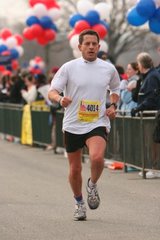
Got out and ran a 5-K tonight. Felt a bit like the Tin Man, rumbling and clanking along Raponda Lake Road. It's a bit cold, wind chill dropping down to zero tonight. It'll be spring here one of these days.
Showing posts with label weather. Show all posts
Showing posts with label weather. Show all posts
Monday, March 23, 2009


Tuesday, March 3, 2009
Sue Me, I'm Sad
Stuck in Town Meeting for most of the day. Sigh. Trying to get some work done. So far, it's two big and good votes (keep a penny tax for economic development in the Valley, much needed, and throw some money to the non-profit day care center by the library, also much needed).
Lot to do today. Lisa is basically half-handed after the second hand surgery, so I'm running amok. Lots of day job things to do, animals to feed, fires to keep going, meetings to endure, miles to run.
On a sad note: If you've ever driven across Texas for hours and hours and hours, you listened to Paul Harvey. And while you might not have agreed with everything he said, the man had a voice. Calming, even while you disagreed violently with him -- something you can't really can't say about most other talkers. Here's the top half of the NYTimes obituary:
Paul Harvey, who captivated millions of American listeners for nearly six decades with his homespun radio news reports and conservative commentaries, delivered nationally on weekdays in a stentorian staccato, died on Saturday at the Mayo Clinic Hospital near his winter home in Phoenix. He was 90.
Mr. Harvey, who lived in the Chicago suburb of River Forest, died with his family at his side, Louis Adams, an ABC Radio Networks spokesman, told The Associated Press. No cause was given.
Mr. Harvey, who joined ABC in 1951, was forced to suspend his broadcasts for several months in 2001 by a virus that weakened a vocal cord, but he returned to his Chicago studio and remained on the air until recently.
In his heyday, which lasted from the 1950s through the 1990s, Mr. Harvey’s twice-daily soapbox-on-the-air was one of the most popular programs on radio. Audiences of as many as 22 million people tuned in on 1,300 stations to a voice that had been an American institution for as long as most of them could remember.
Like Walter Winchell and Gabriel Heatter before him, he personalized the radio news with his right-wing opinions, but laced them with his own trademarks: a hypnotic timbre, extended pauses for effect, heart-warming tales of average Americans and folksy observations that evoked the heartland, family values and the old-fashioned plain talk one heard around the dinner table on Sunday.
“Hello, Americans,” he barked. “This is Paul Harvey! Stand byyy for Newwws!”
He railed against welfare cheats and defended the death penalty. He worried about the national debt, big government, bureaucrats who lacked common sense, permissive parents, leftist radicals and America succumbing to moral decay. He championed rugged individualism, love of God and country, and the fundamental decency of ordinary people.
“You can almost hear the amber waves of grain,” the comedian Danny Thomas told him.
Mr. Harvey was unapologetic. “I have never pretended to objectivity,” he once said. “I have a strong point of view, and I share it with my listeners. I have no illusions about changing the world, but to the extent that I can I’d like to shelter your and my little corner of it.”
He loved human-interest stories, and the one-liners he tacked on to them. “Nudists in Lakeland, Florida, are upset that outsiders are sneaking a peek through a hole in their fence,” he intoned. “The police promise to look into it.”
Or: “A man called the I.R.S. and asked if birth control pills could be deducted. The I.R.S. worker, not missing a beat, came back and said, ‘Only if they don’t work.’ ”
Or: “White House occupants come and go. They are just like diapers. They should be changed often, and for the same reasons.”
In a format virtually unchanged over the years, his style was stop-and-go, with superb pacing and silences that rivaled Jack Benny’s. He spoke directly to the listener, with punchy sentences, occasional exclamations of “Good heavens!” or “Oh, my goodness!” and pauses that squeezed out the last drop of suspense: the radio broadcaster’s equivalent of the raised eyebrow or the knowing grin.
He was a wordsmith, too, banging scripts out on a typewriter, and rightly or wrongly was credited with inventing the terms “Reaganomics,” “skyjackers,” and “guesstimate.” Listeners came to expect stock cues: “Stay tuned for the rest of the story,” and “May I have your undivided attention for just a moment.”
Monday, March 2, 2009
More Snow. And Ice.
Took Lisa down to the hospital for her second hand surgery today. Enjoyed my first ice-slip of the entire year -- right down on the elbow. Ouch. Hurt like hell.

Thinking today is maybe not such a good running day, after all.
Here's my fun thought du jour, courtesy of Ben Sargent:
Friday, February 27, 2009
The Skating Rink
Went for another 5-K tonight. I'm dragging in the mornings, so it seems to make sense. At least, it usually makes sense, but not so much tonight. It warmed up something wild today, temperature in the low 50s, then started raining late afternoon. It had cooled off quite a bit by 8p when I dropped 10 dozen eggs off at the market and started out running on Raponda Road. This limited my choices; I could run on an icy road, I could run in snowdrifts, or I could run in ankle-deep, muddy water.
The good news is, I only fell down once.
Based on tonight's run, I'd say mud season is coming early. I know better, though. We haven't had a single nor'easter this winter -- at least, I don't think we've had one -- which means it's going to be a rough March. Still, it feels really good to run, and it even feels really good to run in the rain. For some odd reason, running in the rain makes me feel like I'm going to be a runner again.
In other news, we're adjusting to the new chickens. We got 65 of them -- 25 production Reds, 35 Aruacanas, and five Buff Orpingtons. The first few nights were rough; the peep-peep-peep coming from the brooder in the bathroom doesn't make for great sleeping. But I'm getting used to them again.
Other animal news. The kids in the dairy goats are starting to kick. We've lost one Nigerian doe; poor girl hung herself in a hay net. My lead milk goat, North Star, miscarried. But we've still got three does in the family way, and you can feel the little kids occasionally. For some reason, they get a little more active when Stink, the famous border collie, wanders into the goat barn.
(Why is Stink famous? Check this out.)
Busy week ahead. Lisa and I went into Brattleboro today to find a jeweler who could cut her wedding ring off her finger. She hasn't taken it off forever, so it had to be cut off before her carpal tunnel surgery on Monday -- the second of two. Anyway, the jeweler directed us to the fire department, and we had a trio of firefighters snip the ring. Because this is her second surgery in the last month, she'll be dealing with roughly half of one hand. So it's going to be a busy week or two while she gets her hands back.
The good news is, I only fell down once.
Based on tonight's run, I'd say mud season is coming early. I know better, though. We haven't had a single nor'easter this winter -- at least, I don't think we've had one -- which means it's going to be a rough March. Still, it feels really good to run, and it even feels really good to run in the rain. For some odd reason, running in the rain makes me feel like I'm going to be a runner again.
In other news, we're adjusting to the new chickens. We got 65 of them -- 25 production Reds, 35 Aruacanas, and five Buff Orpingtons. The first few nights were rough; the peep-peep-peep coming from the brooder in the bathroom doesn't make for great sleeping. But I'm getting used to them again.
Other animal news. The kids in the dairy goats are starting to kick. We've lost one Nigerian doe; poor girl hung herself in a hay net. My lead milk goat, North Star, miscarried. But we've still got three does in the family way, and you can feel the little kids occasionally. For some reason, they get a little more active when Stink, the famous border collie, wanders into the goat barn.
(Why is Stink famous? Check this out.)
Busy week ahead. Lisa and I went into Brattleboro today to find a jeweler who could cut her wedding ring off her finger. She hasn't taken it off forever, so it had to be cut off before her carpal tunnel surgery on Monday -- the second of two. Anyway, the jeweler directed us to the fire department, and we had a trio of firefighters snip the ring. Because this is her second surgery in the last month, she'll be dealing with roughly half of one hand. So it's going to be a busy week or two while she gets her hands back.
Monday, February 23, 2009
A Good Sore. I Hope.
Starting running again always hurts. Always.
It's sore, but it's a good sore.
Blew the snow off the driveway, all 650 feet of it, at lunch. That was my workout du jour.
Cold outside, below zero with the wind chill. I'll try running tomorrow, hope for less wind.
And, as always, less triteness in the blog.
Sunday, February 22, 2009
Held for Questioning
So I've been feeling hugely bad for the last ... hell, the last two months or so. Doctors looking into things, poking around, trying to figure what's wrong. Everything from semi-benign little owies like low calcium, thyroid imbalance and weight gain (!) to things we'd rather not talk about, places we really don't want to go.
The consistent advice that I've gotten, though, is that I need to exercise. I've been sleeping 12-14 hours per day, feeling tired all the time even so. This morning I got up and ran, 5K. At least, I started to run 5K. But I was interrupted.
Held for questioning, as it were.
I'd made about a mile down a lakefront road about 815a this morning, hoping to beat a big snowstorm and still have time to get to the hardware store for a new bathtub stopper (part of another diagnostic test. Really). It wasn't too bad; I was stumbling a bit, but there wasn't heavy tourist traffic, it wasn't too windy, and it hadn't started to snow yet. I was feeling OK, even after the three marked and one unmarked state police cars converged on me.
Understand, four state police cars in one location in Vermont can only mean one of three things: Community event with free food, lunch break, or very bad news. Predictably, it was the latter. They were looking for a short (me) male (me) in his mid-30s (me, about a decade ago) in a blue sweatshirt (me again) with a beard.
It was a bit frosty, so I was wearing a neck warmer that covered my face. I couldn't help but notice the hands on the guns. One of the morals of the story: Keep your ID with you. I handed over my driver's license and sat while they ran it. A few questions later, I was back on the road, plodding along. Turns out the aforementioned short, bearded, young male in the blue sweatshirt had been threatening an ex-girlfriend. The troopers were ... professional, but made me very happy I didn't have a beard.
Got enough health problems going on without lead poisoning.
I'll catch up more later.
The consistent advice that I've gotten, though, is that I need to exercise. I've been sleeping 12-14 hours per day, feeling tired all the time even so. This morning I got up and ran, 5K. At least, I started to run 5K. But I was interrupted.
Held for questioning, as it were.
I'd made about a mile down a lakefront road about 815a this morning, hoping to beat a big snowstorm and still have time to get to the hardware store for a new bathtub stopper (part of another diagnostic test. Really). It wasn't too bad; I was stumbling a bit, but there wasn't heavy tourist traffic, it wasn't too windy, and it hadn't started to snow yet. I was feeling OK, even after the three marked and one unmarked state police cars converged on me.
Understand, four state police cars in one location in Vermont can only mean one of three things: Community event with free food, lunch break, or very bad news. Predictably, it was the latter. They were looking for a short (me) male (me) in his mid-30s (me, about a decade ago) in a blue sweatshirt (me again) with a beard.
It was a bit frosty, so I was wearing a neck warmer that covered my face. I couldn't help but notice the hands on the guns. One of the morals of the story: Keep your ID with you. I handed over my driver's license and sat while they ran it. A few questions later, I was back on the road, plodding along. Turns out the aforementioned short, bearded, young male in the blue sweatshirt had been threatening an ex-girlfriend. The troopers were ... professional, but made me very happy I didn't have a beard.
Got enough health problems going on without lead poisoning.
I'll catch up more later.
Monday, October 20, 2008
Mild Aggravation
Busy weekend. Started on the pig winter house. Lost the tape measure somewhere. Also lost the hose nozzle that goes to the pig pasture. And lost two chickens -- it looks like a fisher cat peeled back some of the poultry wire around the coop and killed them. I stapled it up as best as I could, but suspect I won't sleep too well tonight, listening for clucking roosters.
Gotten reacquainted with another book project tonight. More when there's a contract. I suspect I'd better sell books for pleasure before people start buying them for fuel.
Down into the 20s tonight. The cold is coming.
Gotten reacquainted with another book project tonight. More when there's a contract. I suspect I'd better sell books for pleasure before people start buying them for fuel.
Down into the 20s tonight. The cold is coming.
Wednesday, October 8, 2008
No. 300
A busy, busy month.
Bought the new goat. She's an Alpine, giving us about two quarts of milk every day. Will loves the stuff. John hates it. I saved up enough milk to make a two-pound wheel of goat's milk cheddar over the weekend that's ready for aging. I'll provide a report when it's ready.
Garden worked out OK. The corn was flattened by what was left of Hurricane Ike, but we have more than 100 pints of tomato sauce canned and ready to go. We've got about 50 pints of salsa verde with tomatillos and onions from the CSA. We've got about 50 pints of carrots and about 50 pints of green beans. We've got onions, scallions, blackberries, blueberries, peaches, nectarines, celery, broccoli, bell pepper, herbs and pesto in the freezer. We'll soon have 50 broilers -- they're getting huge -- and three pigs.
I'd say we're ready for winter, but not quite.
The chainsaw blew a piston, and fixing it ran about $200. I took a few days of vacation from the Day Job to finish up this week. The blade was getting a bit dull -- that'll happen when you pinch it in a tall beech tree, like I did -- so I took it to the shop for a quick sharpening. Turns out the replaced piston now needs replacing. Ack. Anyway, at this rate, I'll have our winter wood done by April or so.
We're certainly not ready for the Greater Depression.
But it's not winter just yet, nor has the Greater Depression totally kicked off. And it is gorgeous. The leaves are peaking in southern Vermont this week:

A nice story from this week's WSJ that reminds me I need to get off my ass:
![[A.C. Morgan]](https://lh3.googleusercontent.com/blogger_img_proxy/AEn0k_tgHP14E34m8PChdDWa0V0dsYCrkSuxe-v_bePct-cbUVTqhUibKkPxOpSz1IWeBn6wumifsptSlGnmDRFnUu1NxLHyNFuRhfJ0ndY8Oxaj6jiZSpDSJ5V05ObidYmYMaH35N-z0i8EIZSgMnorPL0=s0-d) A.C. Morgan
A.C. Morgan
Bought the new goat. She's an Alpine, giving us about two quarts of milk every day. Will loves the stuff. John hates it. I saved up enough milk to make a two-pound wheel of goat's milk cheddar over the weekend that's ready for aging. I'll provide a report when it's ready.
Garden worked out OK. The corn was flattened by what was left of Hurricane Ike, but we have more than 100 pints of tomato sauce canned and ready to go. We've got about 50 pints of salsa verde with tomatillos and onions from the CSA. We've got about 50 pints of carrots and about 50 pints of green beans. We've got onions, scallions, blackberries, blueberries, peaches, nectarines, celery, broccoli, bell pepper, herbs and pesto in the freezer. We'll soon have 50 broilers -- they're getting huge -- and three pigs.
I'd say we're ready for winter, but not quite.
The chainsaw blew a piston, and fixing it ran about $200. I took a few days of vacation from the Day Job to finish up this week. The blade was getting a bit dull -- that'll happen when you pinch it in a tall beech tree, like I did -- so I took it to the shop for a quick sharpening. Turns out the replaced piston now needs replacing. Ack. Anyway, at this rate, I'll have our winter wood done by April or so.
We're certainly not ready for the Greater Depression.
But it's not winter just yet, nor has the Greater Depression totally kicked off. And it is gorgeous. The leaves are peaking in southern Vermont this week:

A nice story from this week's WSJ that reminds me I need to get off my ass:
Crash Survivor Scores Rare Triathlon Invite
Wall Street Exec Trains for Legendary Ironman Race
A.C. MorganA.C. Morgan, seen during a triathlon in Rhode Island in July.
Ten years ago Mr. Morgan wasn't even sure if he'd ever walk again. A plane crash left him with two broken vertebrae in his neck and 30 percent of his body covered in burns. "I had a 50-50 shot at life," Mr. Morgan recalls. "I had to learn everything all over again -- how to brush my teeth, walk, go to the bathroom." Mr. Morgan's entire left arm was burned except for one spot. "I have a complete outline where my Timex Ironman watch was. It is the only spot on my arm where I have hair." The outline reminded Mr. Morgan of Timex's old ad, "It takes a lickin' and keeps on tickin'." He called the company to pitch himself as the subject of its next ad only to discover the campaign had been discontinued. But company representatives said if he ever wanted to do the Ironman he should call back. Mr. Morgan recalls thinking, "I can't even go to the bathroom by myself."
Before the accident Mr. Morgan had competed in sprint triathlons. After physical therapy he returned to the gym five or six days a week to lift weights and ride the Lifecycle bike for 30 minutes. In 2006, Mr. Morgan found himself listening to a client describing how he had competed in the Ironman and it made him remember the Timex offer. He wrote the company to retell his story of the plane crash and his watch "tattoo." In June 2007 he received a surprising call from Herbie Calves, Timex's vice president of sports marketing, asking whether he wanted an Ironman World Championship number for 2007 or 2008. He opted for 2008.
The 38-year-old Mr. Morgan, who co-manages U.S. equity sales trading at J.P. Morgan in New York, has since reprioritized his life to focus on training. He lives in Darien, Conn., and is married with two children. He stands 6-foot-1 and weights 180 pounds.
The Workout
Sponsorships allow many Ironman competitors to train full time. Mr. Morgan doesn't have that luxury. Before he began training for the race, he awoke at 4:30 a.m. to catch the 4:50 a.m. train to midtown Manhattan. Now, he wakes up at 3:20 a.m. three days a week to ride, run or swim for an hour before work. In January, Mr. Morgan hired a personal trainer who creates workouts he can download to his Blackberry. He can call her any time he has questions or needs motivation. "The other day I wasn't feeling the 22-mile run and she tells me, 'Think 22 miles plus 100% humidity on black lava.' I pay for that," he says. In addition to his morning workouts, he sometimes tacks on an additional run or bike ride after work, depending on what his trainer recommends.
On weekends, Mr. Morgan swims at his local YMCA and bikes 100 to 120 miles, followed by a 30- to 40-minute run. In bad weather, he puts his bike on a trainer so he can cycle inside while watching episodes of the HBO comedy "Entourage." According to the Ironman media guide, the average competitor trains between 18 and 30-plus hours per week: about seven miles per week swimming, 225 miles per week biking and 48 miles per week running. Mr. Morgan says his typical week sees him swim five miles, bike 150 to 170 miles and run 30 miles. To prepare himself for race day, he competed in two half-Ironmans, one in May and one in June.
Sample Workout
Mon. – Rest day
Tues.-Thurs. – 60-minute run, bike or swim
Sat. – Bike 120 miles followed immediately by a three-mile run.
Sun. – 20-mile run; swim.
Mr. Morgan hit a hurdle last October when he developed plantar fasciitis, a painful inflammation in the foot most often felt in the heel. "I can't get rid of it," he says. "You really have to walk away from [training] for it to heal, but I can't afford to." He goes to a doctor in the city once a week for laser treatment to break down the scar tissue and has also ordered custom orthotics for his sneakers. He stretches daily to ease the pain.
The Diet
Eating more and more often is Mr. Morgan's new dietetic challenge. "I could go home and eat a pint of Ben & Jerry's every night and still lose weight," he says. Mr. Morgan estimates that he has lost 15 pounds since he started training. To maintain his energy, he tries to eat every three hours. In the morning he has Raisin Bran topped with a banana and skim milk, followed by a cup of coffee and an energy bar. After his workout he has a recovery drink. He eats lunch at his desk, usually a turkey sandwich on whole wheat, which he orders in. "I probably eat chicken, vegetables and pasta seven nights a week, 365 days a year," he says.
Many athletes drastically change their diet during training. "I don't have free time to weigh everything and I'm not a bad eater," says Mr. Morgan, who instead paid Trismarter.com, a company that specializes in designing nutrition and exercise programs for triathletes, to create a diet plan specifically focused on the two days leading up to the race and the race day. He says it recommends hydrating every 10 minutes during the cycling portion. Mr. Morgan set his watch to beep every time he needs to rehydrate or refuel, ingesting calories from Gu, an energy gel, and Fig Newtons. During the run he ingests Gu every hour and drinks water or Gatorade at every mile marker.
The Cost
Tens of thousands of athletes try to get one of the coveted 1,800 spots through a lottery or by winning a spot at one of the qualifying events held around the world. "Spots are sold on eBay for up to $60,000," Mr. Morgan says. Timex covered the majority of Mr. Morgan's costs, including the $300 entry fee, and provided him with his jersey, hats, and a Timex team Trek bike.
Since January, Mr. Morgan has bought four pairs of running sneakers, costing between $80 and $110 per pair. After his wife pleaded with him, he also bought a new pair of cycling shoes, which he wears without socks. Triathlons are a gear geek's dream sport. "It's like a different version of golf," he says. "I could come home every day and go on one of 30 sites and buy a new water bottle holder or Gu or visor." Timex supplied Mr. Morgan with his bike, which could run from $3,000 to $20,000. He spends $250 a month on his personal trainer and paid $300 for his Trismarter.com nutrition evaluation. Membership at the YMCA is about $100 a month.
The Effort
Mr. Morgan says his biggest issue is time management. Making time for family and staying on top of his game at work have been a challenge. "I'm struggling to prioritize it all," he says. "My wife is so done with this." He works out at 4:30 a.m. on weekends to get in his training before his family wakes up. Mr. Morgan started at J.P. Morgan in June. "Any time you start in a new environment you have to prove yourself again," he says. "If I had been there six years it might be easier to take more luxury, but I pride myself on my work ethic and am one of the first people there in the morning."
The Benefit
Mr. Morgan's family and friends will join him in Hawaii to cheer him on. They are staying four days after the race to enjoy Hawaii. "I may not move the first two days," he jokes. Mr. Morgan says one of the professional triathletes gave him his best advice yet: "He told me the biggest waste is running down hard that last mile to the finish line. He wasn't telling me to walk but just to slow down and absorb it because I'm proving the impossible possible."
Write to Jen Murphy at workout@wsj.com
Sunday, July 27, 2008
Multiple Border Collies
We only have two, but it feels like more.
And for that matter, what should a group of border collies be called? My vote still: If a bunch of turkeys is a raft, and multiple quail is a covey, then it just has to be a fuckery of border collies. They're making everyone modestly crazy. Pepper has decided in her old age that she's scared of thunder, and Stink is being ... stinky. Smelly. Etc.
Bunches of spare food in the freezer. We got about 15 pounds of very ripe bananas from the market for $3; Lisa mashed them, made three loaves of banana nut bread, and saved the rest for later. Also have 15 half-pints of peach preserves. And a bunch of bread-and-butter pickles.
Baby chickens are doing well -- all 65 of them. And the younger flock has started to lay -- little, marble-sized eggs, about two-three every day.
Wish it would stop raining. Sigh.
And for that matter, what should a group of border collies be called? My vote still: If a bunch of turkeys is a raft, and multiple quail is a covey, then it just has to be a fuckery of border collies. They're making everyone modestly crazy. Pepper has decided in her old age that she's scared of thunder, and Stink is being ... stinky. Smelly. Etc.
Bunches of spare food in the freezer. We got about 15 pounds of very ripe bananas from the market for $3; Lisa mashed them, made three loaves of banana nut bread, and saved the rest for later. Also have 15 half-pints of peach preserves. And a bunch of bread-and-butter pickles.
Baby chickens are doing well -- all 65 of them. And the younger flock has started to lay -- little, marble-sized eggs, about two-three every day.
Wish it would stop raining. Sigh.
Monday, June 2, 2008
How I Spent My 2008 (Summer) Tax Rebate
Devil pig photos tomorrow. But for today, here's another of my contributions (or maybe my children's contributions? Arab investors' contributions? Random Chinese bondholders?) to the American economy, courtesy of the rebate check that arrived last week. Only a few more months until I wish I'd gotten this baby in, oh, March or so:


Wednesday, May 21, 2008
Cold, Wet and Rainy
Only been able to plant one of the apple trees. Still waiting to take Lisa's tomato and pepper plants out of flats and put them into the ground. Also need to dig up another 300 to 500 square feet of garden. Here's how it works:
1. Break sod into squares with pitchfork
2. Pull big rocks from ground
3. Get on hands and knees, pull up sod
4. Pull big rocks from ground
5. Turn soil over with pitchfork
6. Pull big rocks from ground
See the pattern? Pre-Columbian gardening, that's us.
The pigs are cracking me up. They sleep late. When I go to look at them in the morning, they've usually burrowed under the hay, and all you can see are little curly pig tails sticking out of the hay. The really good news? They're eating less grain that I'd expected. They've been around a bit more than a week, and haven't gone through an entire bag.
(I expect that'll change).
They eat a ton of leaves off bushes, and they're doing very well with old veggies and fruits from the market. We went to pick up the pig bucket tonight, and were warned that we'll need to start making daily trips very soon, when watermelon and fruit sales pick up.
I'll hope they do, and not just for the piglets' sakes -- I worry that this is going to be a slow summer for folks who depend on tourists. Four dollar gas ain't nothing to sneeze at, and I don't think it's getting better any time soon. Saw a story today where some analysts said oil might get as high as $140 this year. Given that it's at $132 today -- up from $129 yesterday -- um, yeah. I think it might hit $140 at some point this year. Like, before Memorial Day.
Back to the piglets -- I'm wondering if I should introduce them to the collies. I'm not utterly stupid; I know that nothing good can come from this. But I just know that Stink in particular would enjoy playing with pigs.
Maybe it'd be a name thing.
1. Break sod into squares with pitchfork
2. Pull big rocks from ground
3. Get on hands and knees, pull up sod
4. Pull big rocks from ground
5. Turn soil over with pitchfork
6. Pull big rocks from ground
See the pattern? Pre-Columbian gardening, that's us.
The pigs are cracking me up. They sleep late. When I go to look at them in the morning, they've usually burrowed under the hay, and all you can see are little curly pig tails sticking out of the hay. The really good news? They're eating less grain that I'd expected. They've been around a bit more than a week, and haven't gone through an entire bag.
(I expect that'll change).
They eat a ton of leaves off bushes, and they're doing very well with old veggies and fruits from the market. We went to pick up the pig bucket tonight, and were warned that we'll need to start making daily trips very soon, when watermelon and fruit sales pick up.
I'll hope they do, and not just for the piglets' sakes -- I worry that this is going to be a slow summer for folks who depend on tourists. Four dollar gas ain't nothing to sneeze at, and I don't think it's getting better any time soon. Saw a story today where some analysts said oil might get as high as $140 this year. Given that it's at $132 today -- up from $129 yesterday -- um, yeah. I think it might hit $140 at some point this year. Like, before Memorial Day.
Back to the piglets -- I'm wondering if I should introduce them to the collies. I'm not utterly stupid; I know that nothing good can come from this. But I just know that Stink in particular would enjoy playing with pigs.
Maybe it'd be a name thing.
Thursday, May 1, 2008
Pig Things
Got a call last night from a guy who can sell us three Yorkshire piglets, so I spent a couple of hours early this morning on the fenceline, trimming brush. I'll put the electric fence up this weekend and assemble a quick, pallet-shack for the beasts. Also have to get a trough and watering barrel. Lot of stuff to do.
On the goat front, the Southern Vermont Dairy Goat Association is right up the road from us. I've been doing some back-and-forth with them, and one of their members may be selling a couple of yearling goats. They wouldn't be ready for milking until fall, but ...
Need to rent a rototiller in the next week, too. We got flurries yesterday (!) and the last freeze shouldn't be for another couple of weeks, but we'll have to have everything in the ground by then. I've done just about enough hand tilling to last, oh, a lifetime.
Hoping to get back on the running track next week. Looks like physical terrorism is just about over.
A quick tip of the hat to Frances Bolles, Don's child (Don was the Arizona Republic reporter who was killed in 1976 by a car bomb planted by some major assholes, one of whom is 78 and asking for parole. And shouldn't get it). She's right about the cute little centerpiece in the Newseum:
She's married and has a son. She's a successful author and career development expert. Nearly 32 years have passed and still, at any moment, it's once again June 2, 1976. Like when she read that the recently opened Newseum in Washington, D.C., has her father's bombed out car on display.
“That is just grotesque,” Frances said. “I can't tell you what pain it is knowing that people are going to walk by and gawk. It reinforces the idea that my father is a footnote, and I rail against that. Over time, a victim is forgotten so that in something like a clemency hearing the focus goes to the person who is living rather than the person who was killed. My father was real. I don't want anyone to forget that.”
Back to the day job, aka making little rocks out of big rocks.
On the goat front, the Southern Vermont Dairy Goat Association is right up the road from us. I've been doing some back-and-forth with them, and one of their members may be selling a couple of yearling goats. They wouldn't be ready for milking until fall, but ...
Need to rent a rototiller in the next week, too. We got flurries yesterday (!) and the last freeze shouldn't be for another couple of weeks, but we'll have to have everything in the ground by then. I've done just about enough hand tilling to last, oh, a lifetime.
Hoping to get back on the running track next week. Looks like physical terrorism is just about over.
A quick tip of the hat to Frances Bolles, Don's child (Don was the Arizona Republic reporter who was killed in 1976 by a car bomb planted by some major assholes, one of whom is 78 and asking for parole. And shouldn't get it). She's right about the cute little centerpiece in the Newseum:
She's married and has a son. She's a successful author and career development expert. Nearly 32 years have passed and still, at any moment, it's once again June 2, 1976. Like when she read that the recently opened Newseum in Washington, D.C., has her father's bombed out car on display.
“That is just grotesque,” Frances said. “I can't tell you what pain it is knowing that people are going to walk by and gawk. It reinforces the idea that my father is a footnote, and I rail against that. Over time, a victim is forgotten so that in something like a clemency hearing the focus goes to the person who is living rather than the person who was killed. My father was real. I don't want anyone to forget that.”
Back to the day job, aka making little rocks out of big rocks.
Monday, April 28, 2008
So. Not. Good.
At $200 bbl, US gasoline is about $7 per gallon. Not. So. Good. Here are some of the ugly details from the Financial Times:
http://www.ft.com/cms/s/0/4200dc9e-1521-11dd-996c-0000779fd2ac.html
The good news is that we extended the garden another 30-40 feet on Sunday. Took some of the pressure off the indoor flats, putting some broccoli and kale into the new bads. We're going to keep expanding until we run out of space, probably rototill the back yard and plant a mix of squash, beans and corn along the driveway.
The Saturday was a little more entertaining -- spent it learning to make cheese at Ricki Carroll's seminar in Ashfield, Mass. Went home and promptly started a big batch of cheddar, which is currently aging under cheesecloth and an asparagus steamer (keeps the cats and mice out) on a high shelf. I'll know how it comes out in, oh, two months or so.
Anyway. I'd recommend Ricki's class highly. The only downside is, there's not an opening until September. And they're crowded. Very crowded. Must've been 40 people at this one. It was an interesting group, though. Most of the people younger than me were in it for the sustainability issues -- they want to be able to make more of their own food when they have to make it. The folks older than me were more, eh, it's something fun to do in retirement.
Still scratching my head a bit about that one. But I did get a fair amount of supply -- some more cultures (thermophilic and mesophilic), propionic Shermanii for the Swiss, more salt and calcium chloride, and some butter muslin. All in all, I was restrained. Seriously.
Got a lot to do this week, barely time to take a break from the day job. But just saw the FT story and thought, yeeesh. I'm only commuting upstairs and downstairs, and thinking I'd better get more livestock. And one of these crosscut guys, since even a chainsaw is about to get mighty damn expensive:
http://www.lehmans.com/shopping/product/detailmain.jsp?itemID=26&itemType=PRODUCT&iMainCat=836&iSubCat=847&iProductID=26
Raining like hell, and supposed to get back down into the low 20s by midweek. Springtime in Vermont ...
http://www.ft.com/cms/s/0/4200dc9e-1521-11dd-996c-0000779fd2ac.html
The good news is that we extended the garden another 30-40 feet on Sunday. Took some of the pressure off the indoor flats, putting some broccoli and kale into the new bads. We're going to keep expanding until we run out of space, probably rototill the back yard and plant a mix of squash, beans and corn along the driveway.
The Saturday was a little more entertaining -- spent it learning to make cheese at Ricki Carroll's seminar in Ashfield, Mass. Went home and promptly started a big batch of cheddar, which is currently aging under cheesecloth and an asparagus steamer (keeps the cats and mice out) on a high shelf. I'll know how it comes out in, oh, two months or so.
Anyway. I'd recommend Ricki's class highly. The only downside is, there's not an opening until September. And they're crowded. Very crowded. Must've been 40 people at this one. It was an interesting group, though. Most of the people younger than me were in it for the sustainability issues -- they want to be able to make more of their own food when they have to make it. The folks older than me were more, eh, it's something fun to do in retirement.
Still scratching my head a bit about that one. But I did get a fair amount of supply -- some more cultures (thermophilic and mesophilic), propionic Shermanii for the Swiss, more salt and calcium chloride, and some butter muslin. All in all, I was restrained. Seriously.
Got a lot to do this week, barely time to take a break from the day job. But just saw the FT story and thought, yeeesh. I'm only commuting upstairs and downstairs, and thinking I'd better get more livestock. And one of these crosscut guys, since even a chainsaw is about to get mighty damn expensive:
http://www.lehmans.com/shopping/product/detailmain.jsp?itemID=26&itemType=PRODUCT&iMainCat=836&iSubCat=847&iProductID=26
Raining like hell, and supposed to get back down into the low 20s by midweek. Springtime in Vermont ...
Thursday, April 24, 2008
The Doomers Are Out This Week
... and how.
Feeling better. Have the cheesemaking class on Saturday, and will hopefully rent a rototiller on Sunday. The crud is just about gone, and the shoulder feels a tad better. Been going hammer and tongs at the day job, at the expense of enjoying some truly gorgeous weather.
Here are the reads du jour, beginning with the quite inspirational and winding up with the utterly doomed (but yes, I did go to the co-op tonight and get a 25-pound bag of brown rice. And no, the Brattleboro Food Co-op was not limiting its customers).
First, the inspirational:
April 23, 2008
Starting His Retirement With a Splash
By PETE WILLIAMS
ST. PETERSBURG, Fla. — Jeff Conine could have filled the first months of his post-baseball career with golf, fishing and travel — the usual pursuits that a 41-year-old with financial security might enjoy.
Instead, Conine, a 17-year veteran of six big-league teams, has spent long hours swimming, cycling and running in preparation for an ambitious triathlon schedule that will culminate in the Ironman world championship in Kona, Hawaii, in October. Several former teammates, accustomed to the less rigorous conditioning of baseball, have questioned his sanity.
“Guys in my position are supposed to sit back and relax, not do something ridiculous like this,” said Conine, who lives in South Florida and will make his triathlon debut here Sunday at the St. Anthony’s Triathlon.
The race attracts more than 4,000 competitors and is considered the kickoff to the sport’s national calendar. As an Olympic-distance event (0.93-mile swim, 24.8-mile bike ride, and 6.2-mile run), it is a small fraction of the grueling Ironman distance race, but longer than entry-level sprint triathlons.
Conine spent the final six weeks of last season with the Mets and is best known for his role as a first baseman and outfielder for the Florida Marlins teams that won the World Series in 1997 and 2003. A longtime follower of the Ironman world championship, he was inspired to take up the sport by David Samson, the Marlins’ president, who finished the event in 2006.
Conine, who stands 6 feet 1 inch, finished last season at 220 pounds, heavy by triathlon standards, and until recently had limited swimming experience. But he was regarded as one of baseball’s better athletes, having played professional racquetball as a minor leaguer.
He certainly looks the part, having been told for years that he resembles Lance Armstrong, a likeness that seems more pronounced as Conine loses weight while training.
Though baseball is an anaerobic sport with short bursts of activity, unlike the long aerobic nature of triathlon, Conine believes the experience of playing a mentally taxing sport over a 162-game season will ease his transition.
“It’s all about being mentally tough,” he said. “With long-distance triathlon, it’s all about knowing when to push your body and when to rest and persevering through these boring six-hour rides and three-hour runs.”
Next, the amusing:
Green Acres II: When Neighbors Become Farmers
Suburban Arugula Is Organic and Fresh, but About That Manure...
By KELLY K. SPORS
April 22, 2008; Page A1
BOULDER, Colo. -- When suburbanites look out their front doors, a lot of them want to see a lush green lawn. Kipp Nash wants to see vegetables, and not all of his neighbors are thrilled.
"I'd rather see green grass" than brown dirt patches, says 82-year-old Florence Tatum, who lives in Mr. Nash's Boulder neighborhood, across the street from a house with a freshly dug manure patch out front. "But those days are slipping away."
A growing number of suburban Americans are earning extra cash by growing food in their backyards.
Since 2006, Mr. Nash, 31, has uprooted his backyard and the front or back yards of eight of his Boulder neighbors, turning them into minifarms growing tomatoes, bok choy, garlic and beets.
Between May and September, he gives weekly bagfuls of fresh-picked vegetables and herbs to people here who have bought "shares" of his farming operation. Neighbors who lend their yards to the effort are paid in free produce and yard work.
A school-bus driver, Mr. Nash rises at 5 a.m. and, after returning from his morning route, spends his days planting, watering and tending his yard farms and the seedlings he stores in a greenhouse behind his house.
Farmers don't necessarily live in the country anymore. They might just be your next-door neighbor, hoping to turn a dollar satisfying the blooming demand for organic, locally grown foods.
Unlike traditional home gardeners who devote a corner of the yard to a few rows of vegetables, a new crop of minifarmers is tearing up the whole yard and planting foods such as arugula and kohlrabi that restaurants might want to buy. The locally grown food movement has also created a new market for front-yard farmers.
"Agriculture is becoming more and more suburban," says Roxanne Christensen, publisher of Spin-Farming LLC, a Philadelphia company started in 2005 that sells guides and holds seminars teaching a small-scale farming technique that involves selecting high-profit vegetables like kale, carrots and tomatoes to grow, and then quickly replacing crops to reap the most from plots smaller than an acre. "Land is very expensive in the country, so people are saying, 'why not just start growing in the backyard?' "
And on the "we're doomed" front:
Load Up the Pantry
April 21, 2008 6:47 p.m.
I don't want to alarm anybody, but maybe it's time for Americans to start stockpiling food.
No, this is not a drill.
You've seen the TV footage of food riots in parts of the developing world. Yes, they're a long way away from the U.S. But most foodstuffs operate in a global market. When the cost of wheat soars in Asia, it will do the same here.
Reality: Food prices are already rising here much faster than the returns you are likely to get from keeping your money in a bank or money-market fund. And there are very good reasons to believe prices on the shelves are about to start rising a lot faster.
"Load up the pantry," says Manu Daftary, one of Wall Street's top investors and the manager of the Quaker Strategic Growth mutual fund. "I think prices are going higher. People are too complacent. They think it isn't going to happen here. But I don't know how the food companies can absorb higher costs."
(Full disclosure: I am an investor in Quaker Strategic)
Stocking up on food may not replace your long-term investments, but it may make a sensible home for some of your shorter-term cash.
Do the math. If you keep your standby cash in a money-market fund you'll be lucky to get a 2.5% interest rate. Even the best one-year certificate of deposit you can find is only going to pay you about 4.1%, according to Bankrate.com. And those yields are before tax.
Meanwhile the most recent government data shows food inflation for the average American household is now running at 4.5% a year.
And some prices are rising even more quickly. The latest data show cereal prices rising by more than 8% a year. Both flour and rice are up more than 13%. Milk, cheese, bananas and even peanut butter: They're all up by more than 10%. Eggs have rocketed up 30% in a year. Ground beef prices are up 4.8% and chicken by 5.4%.
These are trends that have been in place for some time.
And if you are hoping they will pass, here's the bad news: They may actually accelerate.
Feeling better. Have the cheesemaking class on Saturday, and will hopefully rent a rototiller on Sunday. The crud is just about gone, and the shoulder feels a tad better. Been going hammer and tongs at the day job, at the expense of enjoying some truly gorgeous weather.
Here are the reads du jour, beginning with the quite inspirational and winding up with the utterly doomed (but yes, I did go to the co-op tonight and get a 25-pound bag of brown rice. And no, the Brattleboro Food Co-op was not limiting its customers).
First, the inspirational:
April 23, 2008
Starting His Retirement With a Splash
By PETE WILLIAMS
ST. PETERSBURG, Fla. — Jeff Conine could have filled the first months of his post-baseball career with golf, fishing and travel — the usual pursuits that a 41-year-old with financial security might enjoy.
Instead, Conine, a 17-year veteran of six big-league teams, has spent long hours swimming, cycling and running in preparation for an ambitious triathlon schedule that will culminate in the Ironman world championship in Kona, Hawaii, in October. Several former teammates, accustomed to the less rigorous conditioning of baseball, have questioned his sanity.
“Guys in my position are supposed to sit back and relax, not do something ridiculous like this,” said Conine, who lives in South Florida and will make his triathlon debut here Sunday at the St. Anthony’s Triathlon.
The race attracts more than 4,000 competitors and is considered the kickoff to the sport’s national calendar. As an Olympic-distance event (0.93-mile swim, 24.8-mile bike ride, and 6.2-mile run), it is a small fraction of the grueling Ironman distance race, but longer than entry-level sprint triathlons.
Conine spent the final six weeks of last season with the Mets and is best known for his role as a first baseman and outfielder for the Florida Marlins teams that won the World Series in 1997 and 2003. A longtime follower of the Ironman world championship, he was inspired to take up the sport by David Samson, the Marlins’ president, who finished the event in 2006.
Conine, who stands 6 feet 1 inch, finished last season at 220 pounds, heavy by triathlon standards, and until recently had limited swimming experience. But he was regarded as one of baseball’s better athletes, having played professional racquetball as a minor leaguer.
He certainly looks the part, having been told for years that he resembles Lance Armstrong, a likeness that seems more pronounced as Conine loses weight while training.
Though baseball is an anaerobic sport with short bursts of activity, unlike the long aerobic nature of triathlon, Conine believes the experience of playing a mentally taxing sport over a 162-game season will ease his transition.
“It’s all about being mentally tough,” he said. “With long-distance triathlon, it’s all about knowing when to push your body and when to rest and persevering through these boring six-hour rides and three-hour runs.”
Next, the amusing:
Green Acres II: When Neighbors Become Farmers
Suburban Arugula Is Organic and Fresh, but About That Manure...
By KELLY K. SPORS
April 22, 2008; Page A1
BOULDER, Colo. -- When suburbanites look out their front doors, a lot of them want to see a lush green lawn. Kipp Nash wants to see vegetables, and not all of his neighbors are thrilled.
"I'd rather see green grass" than brown dirt patches, says 82-year-old Florence Tatum, who lives in Mr. Nash's Boulder neighborhood, across the street from a house with a freshly dug manure patch out front. "But those days are slipping away."
A growing number of suburban Americans are earning extra cash by growing food in their backyards.
Since 2006, Mr. Nash, 31, has uprooted his backyard and the front or back yards of eight of his Boulder neighbors, turning them into minifarms growing tomatoes, bok choy, garlic and beets.
Between May and September, he gives weekly bagfuls of fresh-picked vegetables and herbs to people here who have bought "shares" of his farming operation. Neighbors who lend their yards to the effort are paid in free produce and yard work.
A school-bus driver, Mr. Nash rises at 5 a.m. and, after returning from his morning route, spends his days planting, watering and tending his yard farms and the seedlings he stores in a greenhouse behind his house.
Farmers don't necessarily live in the country anymore. They might just be your next-door neighbor, hoping to turn a dollar satisfying the blooming demand for organic, locally grown foods.
Unlike traditional home gardeners who devote a corner of the yard to a few rows of vegetables, a new crop of minifarmers is tearing up the whole yard and planting foods such as arugula and kohlrabi that restaurants might want to buy. The locally grown food movement has also created a new market for front-yard farmers.
"Agriculture is becoming more and more suburban," says Roxanne Christensen, publisher of Spin-Farming LLC, a Philadelphia company started in 2005 that sells guides and holds seminars teaching a small-scale farming technique that involves selecting high-profit vegetables like kale, carrots and tomatoes to grow, and then quickly replacing crops to reap the most from plots smaller than an acre. "Land is very expensive in the country, so people are saying, 'why not just start growing in the backyard?' "
And on the "we're doomed" front:
Load Up the Pantry
April 21, 2008 6:47 p.m.
I don't want to alarm anybody, but maybe it's time for Americans to start stockpiling food.
No, this is not a drill.
You've seen the TV footage of food riots in parts of the developing world. Yes, they're a long way away from the U.S. But most foodstuffs operate in a global market. When the cost of wheat soars in Asia, it will do the same here.
Reality: Food prices are already rising here much faster than the returns you are likely to get from keeping your money in a bank or money-market fund. And there are very good reasons to believe prices on the shelves are about to start rising a lot faster.
"Load up the pantry," says Manu Daftary, one of Wall Street's top investors and the manager of the Quaker Strategic Growth mutual fund. "I think prices are going higher. People are too complacent. They think it isn't going to happen here. But I don't know how the food companies can absorb higher costs."
(Full disclosure: I am an investor in Quaker Strategic)
Stocking up on food may not replace your long-term investments, but it may make a sensible home for some of your shorter-term cash.
Do the math. If you keep your standby cash in a money-market fund you'll be lucky to get a 2.5% interest rate. Even the best one-year certificate of deposit you can find is only going to pay you about 4.1%, according to Bankrate.com. And those yields are before tax.
Meanwhile the most recent government data shows food inflation for the average American household is now running at 4.5% a year.
And some prices are rising even more quickly. The latest data show cereal prices rising by more than 8% a year. Both flour and rice are up more than 13%. Milk, cheese, bananas and even peanut butter: They're all up by more than 10%. Eggs have rocketed up 30% in a year. Ground beef prices are up 4.8% and chicken by 5.4%.
These are trends that have been in place for some time.
And if you are hoping they will pass, here's the bad news: They may actually accelerate.
Sunday, April 20, 2008
Le Crud
It's coming, I know it. Weird feeling at the back of the throat, check. Starting to feel a bit snotty, check. Run-down feeling in general, check. Occasional dizziness, check.
Sigh. I don't need this.
Didn't stop me from getting up and going to town on the chicken run. I had a bit more chicken nastiness than anticipated -- 32 wheelbarrow-fulls, to be precise. Dumped it all close to where the back garden is going. Lisa raked it out.
Given the way the shoulder is feeling (bad), I'm thinking we're going to wind up renting a rototiller for the bulk of the garden creation. Just a little too much manual labor right now.
After I finished the chicken run cleaning, I did a little bit more work on it, mostly measuring for the new door and reinstalling some perches. The plan is to finish up the door, put the netting over the top, and then proceed with a duck rodeo. Yee-haw.
Also put up a clothesline and trimmed about 50 more feet of brush along the fenceline. Nasty, sticky thorns that took forever to get done. At least I got to listen to the frogs and owls while doing it.
Here's to hoping the Emergen-C kicks in.
Sigh. I don't need this.
Didn't stop me from getting up and going to town on the chicken run. I had a bit more chicken nastiness than anticipated -- 32 wheelbarrow-fulls, to be precise. Dumped it all close to where the back garden is going. Lisa raked it out.
Given the way the shoulder is feeling (bad), I'm thinking we're going to wind up renting a rototiller for the bulk of the garden creation. Just a little too much manual labor right now.
After I finished the chicken run cleaning, I did a little bit more work on it, mostly measuring for the new door and reinstalling some perches. The plan is to finish up the door, put the netting over the top, and then proceed with a duck rodeo. Yee-haw.
Also put up a clothesline and trimmed about 50 more feet of brush along the fenceline. Nasty, sticky thorns that took forever to get done. At least I got to listen to the frogs and owls while doing it.
Here's to hoping the Emergen-C kicks in.
Saturday, April 19, 2008
Smells Like Crap
Must be crap.
Wow. Gorgeous day today. Believe I got a sunburn (too bad I'm so damn fat). Anyway, we fixed the frame of the chicken run. Didn't take as long as I was afraid it'd take. Cleaning out the inside of the run, though, was another matter. Imagine a 12 foot by 12 foot space, about six inches deep in hay, chicken crap, and chicken piss.
Oh, and it's been sitting there all winter.
I piled up about a cubic yard of the stuff before punting for the day. Went to town on the back fence, clearing brush along the soon-to-be fenceline with a pair of loppers. Shoulder was just absolutely killing me by the time it got dark.
Made dinner for the kids, did all the dishes, started everyone's laundry, and did some general sweeping, dusting and other cleaning around the house. Lisa baked bread, worked on the garden and did some cleaning. Watched the Jazz beat up on the Rox until midnight -- I think they're already done this year -- and went to bed.
More chickenshit tomorrow.
Wow. Gorgeous day today. Believe I got a sunburn (too bad I'm so damn fat). Anyway, we fixed the frame of the chicken run. Didn't take as long as I was afraid it'd take. Cleaning out the inside of the run, though, was another matter. Imagine a 12 foot by 12 foot space, about six inches deep in hay, chicken crap, and chicken piss.
Oh, and it's been sitting there all winter.
I piled up about a cubic yard of the stuff before punting for the day. Went to town on the back fence, clearing brush along the soon-to-be fenceline with a pair of loppers. Shoulder was just absolutely killing me by the time it got dark.
Made dinner for the kids, did all the dishes, started everyone's laundry, and did some general sweeping, dusting and other cleaning around the house. Lisa baked bread, worked on the garden and did some cleaning. Watched the Jazz beat up on the Rox until midnight -- I think they're already done this year -- and went to bed.
More chickenshit tomorrow.
Friday, April 18, 2008
I'm Back, and Tired
... so a couple of days in Washington, and I'm beat. I didn't run, I didn't exercise, I didn't do tourist things -- although I was there for the pope's visit -- I just worked. And my shoulder (wah!) feels like hell. But it's gorgeous weather out there. Spring's here. Finally.
First things first. Rockets, in six. They just can't lose to a team that plays defense like this:
First things first. Rockets, in six. They just can't lose to a team that plays defense like this:

The Jazz. Like Indiana Jones: "The Jazz. I hate those guys." The Rox need another 22-game streak, although (I think) 16 would do quite nicely.
Wendell Berry has an awesome essay in this month's Harper's. I'm going to reprint a few relevant snippets. If you don't have a subscription, get one. Between the Index, Berry, and this months' Kevin Phillips story on how the government cooks economic numbers, this month's issue alone is well worth the $16.97 annual subscription price:
And so, in confronting the phenomenon of “peak oil,” we are really confronting the end of our customary delusion of “more.” Whichever way we turn, from now on, we are going to find a limit beyond which there will be no more. To hit these limits at top speed is not a rational choice. To start slowing down, with the idea of avoiding catastrophe, is a rational choice and a viable one if we can recover the necessary political sanity.
Of course it makes sense to consider alternative energy sources provided they make sense. But also we will have to re-examine the economic structures of our lives, and conform them to the tolerances and limits of our earthly places. When there is no more, our one choice is to make the most and best of what we have.
More reading, from the NYTimes:
April 18, 2008
Sticker Shock in the Organic Aisles
By ANDREW MARTIN and KIM SEVERSON
Shoppers have long been willing to pay a premium for organic food. But how much is too much?
Rising prices for organic groceries are prompting some consumers to question their devotion to food produced without pesticides, chemical fertilizers or antibiotics. In some parts of the country, a loaf of organic bread can cost $4.50, a pound of pasta has hit $3, and organic milk is closing in on $7 a gallon.
“The prices have gotten ridiculous,” said Brenda Czarnik, who was shopping recently at a food cooperative in St. Paul.
Of course, we think we have problems? Read on ...
April 18, 2008
Across Globe, Empty Bellies Bring Rising Anger
By MARC LACEY
PORT-AU-PRINCE, Haiti — Hunger bashed in the front gate of Haiti’s presidential palace. Hunger poured onto the streets, burning tires and taking on soldiers and the police. Hunger sent the country’s prime minister packing.
Haiti’s hunger, that burn in the belly that so many here feel, has become fiercer than ever in recent days as global food prices spiral out of reach, spiking as much as 45 percent since the end of 2006 and turning Haitian staples like beans, corn and rice into closely guarded treasures.
Saint Louis Meriska’s children ate two spoonfuls of rice apiece as their only meal recently and then went without any food the following day. His eyes downcast, his own stomach empty, the unemployed father said forlornly, “They look at me and say, ‘Papa, I’m hungry,’ and I have to look away. It’s humiliating and it makes you angry.”
That anger is palpable across the globe. The food crisis is not only being felt among the poor but is also eroding the gains of the working and middle classes, sowing volatile levels of discontent and putting new pressures on fragile governments.
I'm guessing not even everyone in our own country is concerned about the price of organics. Lots and lots of rough times out there:
April 18, 2008
Workers Get Fewer Hours, Deepening the Downturn
By PETER S. GOODMAN
Not long ago, overtime was a regular feature at the Ludowici Roof Tile factory in eastern Ohio. Not anymore. With orders scarce and crates of unsold tiles piling up across the yard, the company has slowed production and cut working hours, sowing worry and thrift among its workers.
“We don’t just hop in the car and go shopping or get something to eat,” said Kim Baker, whose take-home pay at the plant has recently dropped to $450 a week, from more than $600. “You’ve got to watch everything. If we go to town now, it’s for a reason.”
Throughout the country, businesses grappling with declining fortunes are cutting hours for those on their payrolls. Self-employed people are suffering a drop in demand for their services, like music lessons, catering and management consulting. Growing numbers of people are settling for part-time work out of a failure to secure a full-time position.
The gradual erosion of the paycheck has become a stealth force driving the American economic downturn. Most of the attention has focused on the loss of jobs and the risk of layoffs. But the less-noticeable shrinking of hours and pay for millions of workers around the country appears to be a bigger contributor to the decline, which has already spread from housing and finance to other important areas of the economy.
Monday, April 14, 2008
No. 250
I hadn't run this weekend, so I woke up this morning and decided to be unkind to myself. Did eight miles. Felt pretty good, too. I just kind of zoned out and relaxed, something I really do need to do a bit more. It started out cold, but by the time I finished (no global warming jokes, please), it was mild. Headed into Brattleboro and got some chicken feed and corn, milk, and a new shovel to replace the sorry, busted-ass implement that couldn't lever a 15-pound rock out of the garden.
Plugged away at work all day, taking a break at noon to get Stink out of the pond and pull taps out of the maples. It's been cold at night, so I believe we'll go for one ... more ... half-gallon. We can stop any time we want. Really. We've already got 5 1/2 gallons (and would have had six, if we hadn't let one batch boil over and burn). But we can stop. Honest.
You don't have to agree with him, but give Kunstler props for another hilarious rant:
A President Hillary will also go a long way to defeating the popular delusion that a world ruled by female humans would be heaven-on-earth. (It would be more like one of those chaotic single-parent households in Section-8 housing, ruled by a harried and distracted mom, with a shadowy man in the background molesting the little ones while she was off working at the WalMart.)
Better get to sleep at a reasonable hour. I'll have an insanely busy next few days. Off to The Big Apple and Our Nation's Capital. Sigh. Haven't even packed, and I'm already quite certain that I'd rather be sitting out on the front porch with Gray Kitten on my lap, watching the ducks torment collies and the chickens scratch in the dirt.
Plugged away at work all day, taking a break at noon to get Stink out of the pond and pull taps out of the maples. It's been cold at night, so I believe we'll go for one ... more ... half-gallon. We can stop any time we want. Really. We've already got 5 1/2 gallons (and would have had six, if we hadn't let one batch boil over and burn). But we can stop. Honest.
You don't have to agree with him, but give Kunstler props for another hilarious rant:
A President Hillary will also go a long way to defeating the popular delusion that a world ruled by female humans would be heaven-on-earth. (It would be more like one of those chaotic single-parent households in Section-8 housing, ruled by a harried and distracted mom, with a shadowy man in the background molesting the little ones while she was off working at the WalMart.)
Better get to sleep at a reasonable hour. I'll have an insanely busy next few days. Off to The Big Apple and Our Nation's Capital. Sigh. Haven't even packed, and I'm already quite certain that I'd rather be sitting out on the front porch with Gray Kitten on my lap, watching the ducks torment collies and the chickens scratch in the dirt.
Sunday, April 13, 2008
Flashback Time
Pretty busy weekend.
Got two more months of co-op hours out of the way, working cheese early Saturday afternoon and bagging late Saturday afternoon. Bad weekend for it -- the weather was just gorgeous, and I kept wanting to be outside.
Made it home in time to take Will to a school fund-raiser for his Arizona trip. Went into Keene and got a few needed items: A new wheelbarrow wheel (solid, not inflatable), a good rake, some liquid solder, and a clothesline.
Woke up late Sunday and spent pretty much all day either gardening or cleaning. The garden is coming along, slowly. We've got a space about 10 feet wide by 75 feet long, so far. It'll go another 10 feet or so, then widen out to a patch that's about 15 feet wide by 100 feet long. The problem right now is equipment: I broke a shovel handle and a pitchfork handle. I was pissed.
Fixed the electric fence. I'm hoping it'll at least shock the crap out of Stink the next time he goes chasing the ducks. He's developed a bad habit of going into the pond after them. He won't catch them, but he'll become a very stinky Stink after splashing around the pond for 30 minutes. I caught him by luck earlier this week, turning a leash into a lasso and grabbing him from about 10 feet away. Pretty slick, if I say so myself.
It was beautiful Saturday, but I wasn't so happy on Sunday. Snowing. Not accumulating, but snowing. Damn. On the other hand, it's hard to sulk about weather when you've just finished reading The Worst Hard Time, by Tim Egan. It's a hell of a story -- a man-made weather disaster on top of the Great Depression.
For those of you who don't know (which should include just about anyone who reads this blog), I went to school on the High Plains, on the southern edge of the Dust Bowl. I'm reasonably familiar with the north Texas and Oklahoma panhandles where most of the dirt got kicked up, and I've seen my fair share of dust storms. You could tell who the freshmen were at my school; their cars hadn't been sandblasted yet, and they were still trying to wear contact lenses.
Anyway, you spend any amount of time on the Plains, and you hear old-timers talk about how bad things used to be. You'd see a dust storm coming from 50 miles away, rising about 10,000 feet in the air, and some old-timer would shake his head and mention that when he was growing up, a storm like that meant everything was clear.
The Dust Bowl was such a traumatic part of growing up for so many folks that it really interested me. I'd ask relatives about the Depression, just general "what was it like?" questions. Always got the same answers. My mother's mom lived in east Texas and just muttered about how those poor folks in West Texas got the sorriest deal on the face of the planet. Grandmom (my dad's mother) lived in north Texas during the worst of it. She'd smile, and say, well, it was bad, but everyone was so poor that it just didn't matter. Granddad would just look pissed off.
My great uncle and aunt, who lived in the town where I went to school, were a little more forthcoming. Aunt Mabel would shake her head and say things like, it was just horrible and a mercy that more folks didn't die. Uncle Clendon would just look pissed off.
A few years later, when Uncle Clendon wanted to make some salient point about how I maybe needed to apply myself a little more at school, he mentioned one thing that happened to kids without college educations during the Depression. He and some friends were trying to get a job doing warehouse work in north Texas. Turns out there were four or five openings. About 100 men showed up to apply for the job. The owner didn't have time to sort everyone out, so he made it simple: Work until you drop. Last five standing get the job.
Clendon got one of the jobs. But, jeeez. Worst, hard time, indeed. I'll probably have nightmares about dust storms for a week at least.
Got two more months of co-op hours out of the way, working cheese early Saturday afternoon and bagging late Saturday afternoon. Bad weekend for it -- the weather was just gorgeous, and I kept wanting to be outside.
Made it home in time to take Will to a school fund-raiser for his Arizona trip. Went into Keene and got a few needed items: A new wheelbarrow wheel (solid, not inflatable), a good rake, some liquid solder, and a clothesline.
Woke up late Sunday and spent pretty much all day either gardening or cleaning. The garden is coming along, slowly. We've got a space about 10 feet wide by 75 feet long, so far. It'll go another 10 feet or so, then widen out to a patch that's about 15 feet wide by 100 feet long. The problem right now is equipment: I broke a shovel handle and a pitchfork handle. I was pissed.
Fixed the electric fence. I'm hoping it'll at least shock the crap out of Stink the next time he goes chasing the ducks. He's developed a bad habit of going into the pond after them. He won't catch them, but he'll become a very stinky Stink after splashing around the pond for 30 minutes. I caught him by luck earlier this week, turning a leash into a lasso and grabbing him from about 10 feet away. Pretty slick, if I say so myself.
It was beautiful Saturday, but I wasn't so happy on Sunday. Snowing. Not accumulating, but snowing. Damn. On the other hand, it's hard to sulk about weather when you've just finished reading The Worst Hard Time, by Tim Egan. It's a hell of a story -- a man-made weather disaster on top of the Great Depression.
For those of you who don't know (which should include just about anyone who reads this blog), I went to school on the High Plains, on the southern edge of the Dust Bowl. I'm reasonably familiar with the north Texas and Oklahoma panhandles where most of the dirt got kicked up, and I've seen my fair share of dust storms. You could tell who the freshmen were at my school; their cars hadn't been sandblasted yet, and they were still trying to wear contact lenses.
Anyway, you spend any amount of time on the Plains, and you hear old-timers talk about how bad things used to be. You'd see a dust storm coming from 50 miles away, rising about 10,000 feet in the air, and some old-timer would shake his head and mention that when he was growing up, a storm like that meant everything was clear.
The Dust Bowl was such a traumatic part of growing up for so many folks that it really interested me. I'd ask relatives about the Depression, just general "what was it like?" questions. Always got the same answers. My mother's mom lived in east Texas and just muttered about how those poor folks in West Texas got the sorriest deal on the face of the planet. Grandmom (my dad's mother) lived in north Texas during the worst of it. She'd smile, and say, well, it was bad, but everyone was so poor that it just didn't matter. Granddad would just look pissed off.
My great uncle and aunt, who lived in the town where I went to school, were a little more forthcoming. Aunt Mabel would shake her head and say things like, it was just horrible and a mercy that more folks didn't die. Uncle Clendon would just look pissed off.
A few years later, when Uncle Clendon wanted to make some salient point about how I maybe needed to apply myself a little more at school, he mentioned one thing that happened to kids without college educations during the Depression. He and some friends were trying to get a job doing warehouse work in north Texas. Turns out there were four or five openings. About 100 men showed up to apply for the job. The owner didn't have time to sort everyone out, so he made it simple: Work until you drop. Last five standing get the job.
Clendon got one of the jobs. But, jeeez. Worst, hard time, indeed. I'll probably have nightmares about dust storms for a week at least.
Thursday, April 10, 2008
Where We Live
From today's Reformer:
Thursday, April 10
BRATTLEBORO -- With the first warm week of spring here, wildlife experts are reminding bird lovers that it now is the time to bring in their feeders.
"With the weather we're having this week, I've already heard of a couple of bears wandering around. One already came by a bird feeder," state Wildlife Biologist Forrest Hammond said.
Although people like to see the birds as long as possible, he said, "now there's a lot of natural food for them. They don't need the feed like they do in the wintertime. It's more important to prevent bears from beginning a life of crime simply by taking in your feeders."
Young bears are more apt to go out to feeders, particularly if they got away with it the first time, Hammond said. "Individuals could play a role in educating the bear by making loud noises, trying to scare the bear enough so that it wouldn't want to try to approach the next house."
With the stronger winter, "there may be more bears than normal visiting bird feeders because there was not as much late fall nuts available to them before they went into the den," Hammond said.
Thursday, April 10
BRATTLEBORO -- With the first warm week of spring here, wildlife experts are reminding bird lovers that it now is the time to bring in their feeders.
"With the weather we're having this week, I've already heard of a couple of bears wandering around. One already came by a bird feeder," state Wildlife Biologist Forrest Hammond said.
Although people like to see the birds as long as possible, he said, "now there's a lot of natural food for them. They don't need the feed like they do in the wintertime. It's more important to prevent bears from beginning a life of crime simply by taking in your feeders."
Young bears are more apt to go out to feeders, particularly if they got away with it the first time, Hammond said. "Individuals could play a role in educating the bear by making loud noises, trying to scare the bear enough so that it wouldn't want to try to approach the next house."
With the stronger winter, "there may be more bears than normal visiting bird feeders because there was not as much late fall nuts available to them before they went into the den," Hammond said.
Subscribe to:
Posts (Atom)

 Posts
Posts